RFID asset tracking gives you a clearer view of what you own and how your assets are behaving. When you've implemented your asset tracking software, you will:
- Save time
- Save money
- Lose fewer assets
- Know what you own
- Monitor maintenance better
- Keep an up-to-date fixed asset register
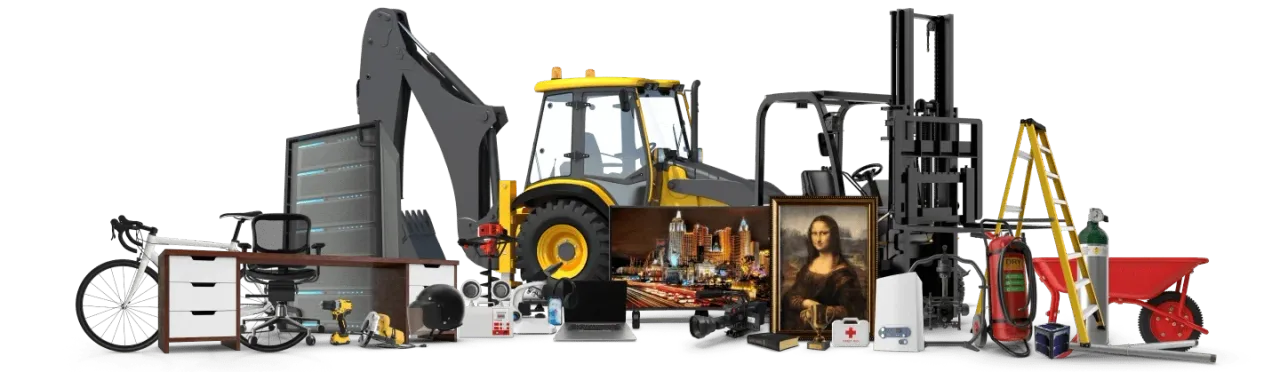
The main goal of any asset tracking software is to give you more accountability over all of your assets. This can be tools and equipment, heavy equipment, healthcare assets, IT assets, high-value collections and more.
What Is RFID?
RFID stands for radio-frequency identification. RFID is an auto-ID technology that allows you to match specific assets to corresponding digital profiles.
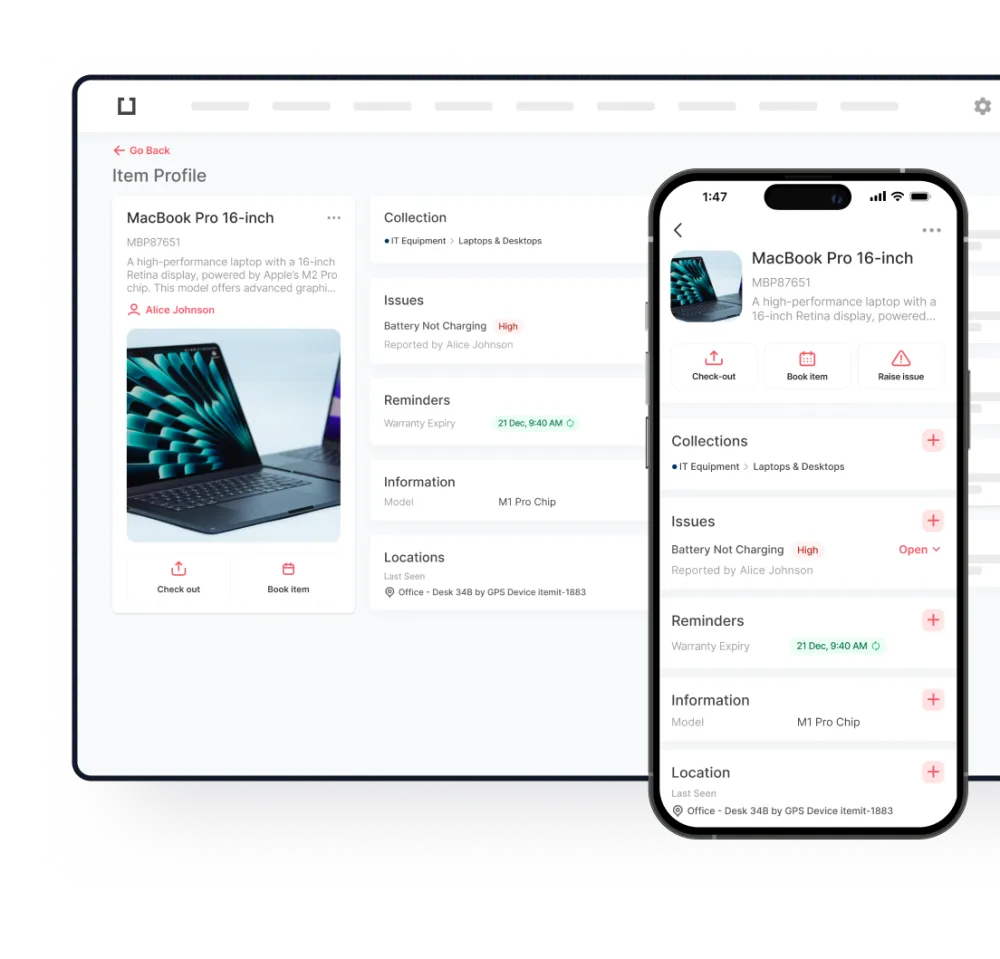
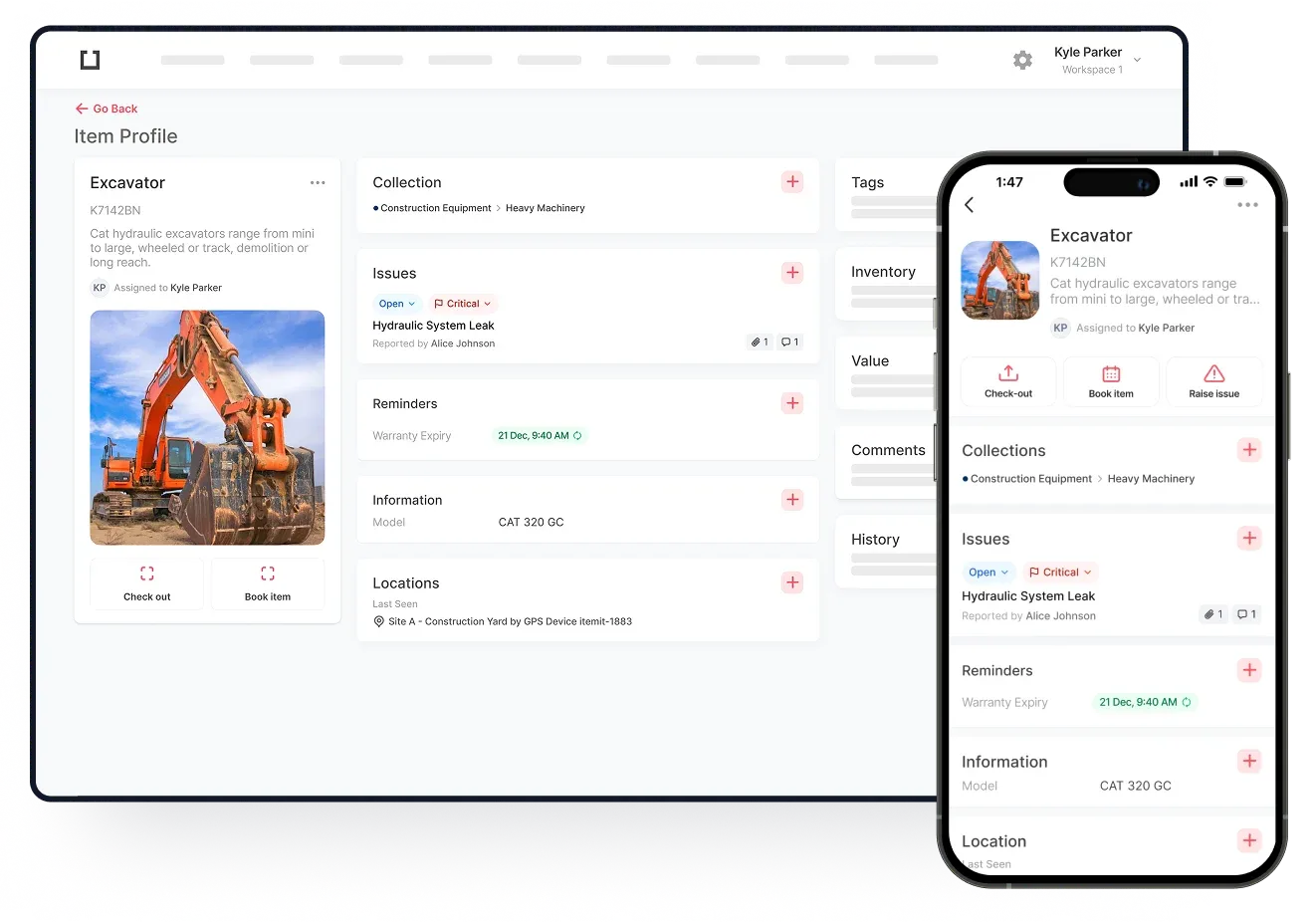
In other words, your asset tracking software will have a register of digital profiles. On these profiles, there will be unique information, such as maintenance dates and the colleagues responsible for these assets.
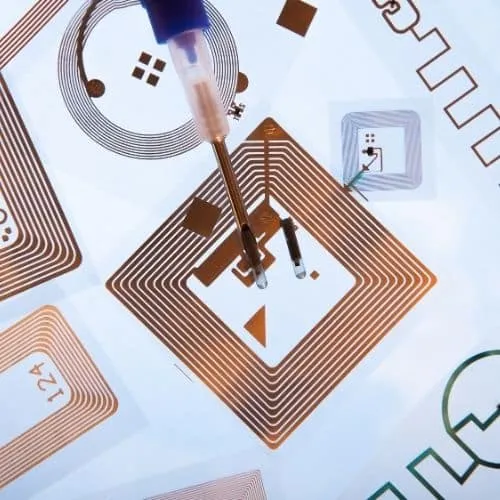
Then, RFID asset tags will link these digital profiles to their physical counterparts, bridging the gap between your software and your physical tools and equipment.
RFID asset tags have two main types, passive and active. Both use antennas to communicate with external hardware via radio frequencies.
Passive RFID
Passive RFID tags have antennas but no batteries. This allows them to be smaller and easier to conceal, meaning these tags are more suitable for high-value collection tracking.
Passive tags are passive as your external RFID hardware will "activate" them. So, if you have a handheld RFID reader, when you pull the trigger it will emit a radio frequency. This radio frequency will bounce off the antennas in a passive tag, indicating their whereabouts.
Because of this, it's possible to find the closest tag in a vicinity, meaning that even if you have hundreds of tagged assets, you can still interact with a uniquely tagged piece of equipment.
Passive RFID tags also come in many different shapes and sizes. This is because most standard tags are conductive. So, if you stick them on metal, such as on a laptop, this will block the signal. Some passive RFID asset tags have subsequently been created to be less conductive, meaning they can be used on metal, ceramics, plastic, and more.
Active RFID
Active RFID tags have a battery, meaning that they are generally larger and more robust. Instead of bouncing a radio frequency, these tags emit their own.
The benefit of this is that they can have a much farther read range, as the interactivity is when the frequencies collide as opposed to when the reader's frequency hits the tag itself.
The main drawback is that these tags need to be recharged to keep them working to the best of their abilities. While this can be integrated into your asset tracking operations, it may reduce the time-saving benefits that RFID asset tracking can provide overall.
Active RFID tags can be a lot more robust, too, meaning you can use them on heavier equipment or mitigate a loss of frequency if you're tracking equipment that will come into contact with chemicals or extreme heats.
What Is RFID Asset Tracking?
RFID asset tracking is the practice of using RFID tag hardware and RFID reader hardware to match physical assets to digital counterparts.
On your asset tracking software, you will have a register of unique assets. So, if you're tracking a gallery, each painting will have its own unique profile, if you're tracking tools, each tool will have its own profile and so on.
RFID asset tracking has an instant and clear benefit. You can track assets at greater speeds and distances. This is effective for:
- Health and safety concerns - you can track assets without having to come into physical contact with them. This can increase COVID security, but also allow you to keep a distance from dangerous chemicals or heats.
- Concealment - you can conceal RFID tags where you can't conceal barcodes or QR codes. This means that you can hide RFID tags in a painting's frame and not reduce the value of the painting, but still track it.
- Distance - as an example, if you need to audit assets within a hospital to fulfil healthcare asset tracking procedures, you can audit without interacting with patients from a corridor.
- Speed - using radio frequencies means that you can "cut corners" with your asset tracking software. If you want to check that all of your assets are in the location they should be, you simply need to pull the trigger on a handheld RFID reader. The radio frequencies in the room will tell your software which assets are and aren't accounted for.
- Small asset tracking and bulk asset tracking - if smaller assets are RFID tagged, asset discovery doesn't require a search. You can find the asset quickly with a handheld reader. This increases your accountability and also reduces the chance of human error, as assets are much likely to be unintentionally missed if there's a wider discovery field.
Handheld RFID
The main benefit of handheld RFID asset tracking is that it speeds up multiple barcode and QR code asset management operations. The core is the same, only with the ability to track from a distance and at a much greater speed.
QR code & barcode asset management also uses the auto-ID technologies of unique QR code and barcode asset tags. The difference here is that you need to use your phone's camera and your asset tracking app to scan these auto-ID asset tags.
With handheld RFID asset tracking, you can circumvent this. Handheld readers link to your phone via BlueTooth and work this way, meaning you get the benefits of speed, concealment and distance.
All asset tag-related features are improved upon by using handheld RFID readers. For example, if you want to log that a group of assets has moved from one location to another, you simply need to pull the trigger and the handheld reader will do the rest. With QR codes, you would still have to scan each tag manually, which gives you time-saving benefits but not to the same extent as using RFID.
Fixed RFID Asset Tracking
Fixed RFID asset tracking is the most automation you can get when it comes to location tracking within your site. Fixed RFID readers work in the same way as handheld readers and use the same tags. So, it will still be a radio frequency interaction that creates the detection of an asset.
Fixed RFID readers work a bit differently, however. They're named as such as you will fix them to tactical locations in your building. The reason for this is as they're used to indicate when assets move from one location to another.
These RFID readers use a constant electromagnetic field created with their antennas. This field allows them to also detect the direction an asset is moving in. When an RFID tag enters the field, this is detected, then the direction is detected by where it leaves the field.
In practice what this means is that a fixed RFID reader can detect when an asset enters or leaves a room, a shelf, or any other location. Once this is logged, these readers can tell your asset tracking software this data.
 Watch video
Overall this allows you to create a digital map of locations that plot out your building and place readers in the corresponding, physical locations. When an asset moves from ward A to ward B, the entire movement is automatically detected and logged, giving you a fully automated audit trail of where your assets are moving to and from.