IT asset management software helps your business keep track of your asset list. With IT asset management software, your business will be able to track what it owns better and add and monitor data related to how your assets are behaving.
Asset management systems give you the ability to create asset-related data and keep it up to date. This means that your fixed asset register is at a lower risk of ghost and zombie assets, meaning your tax and insurance operations are more accurate.
Knowing what you own and being able to pinpoint its behaviour also means that you'll purchase fewer duplicates, lose fewer assets, and maintain a better grasp on asset maintenance.

How Does IT Asset Management Software Work?
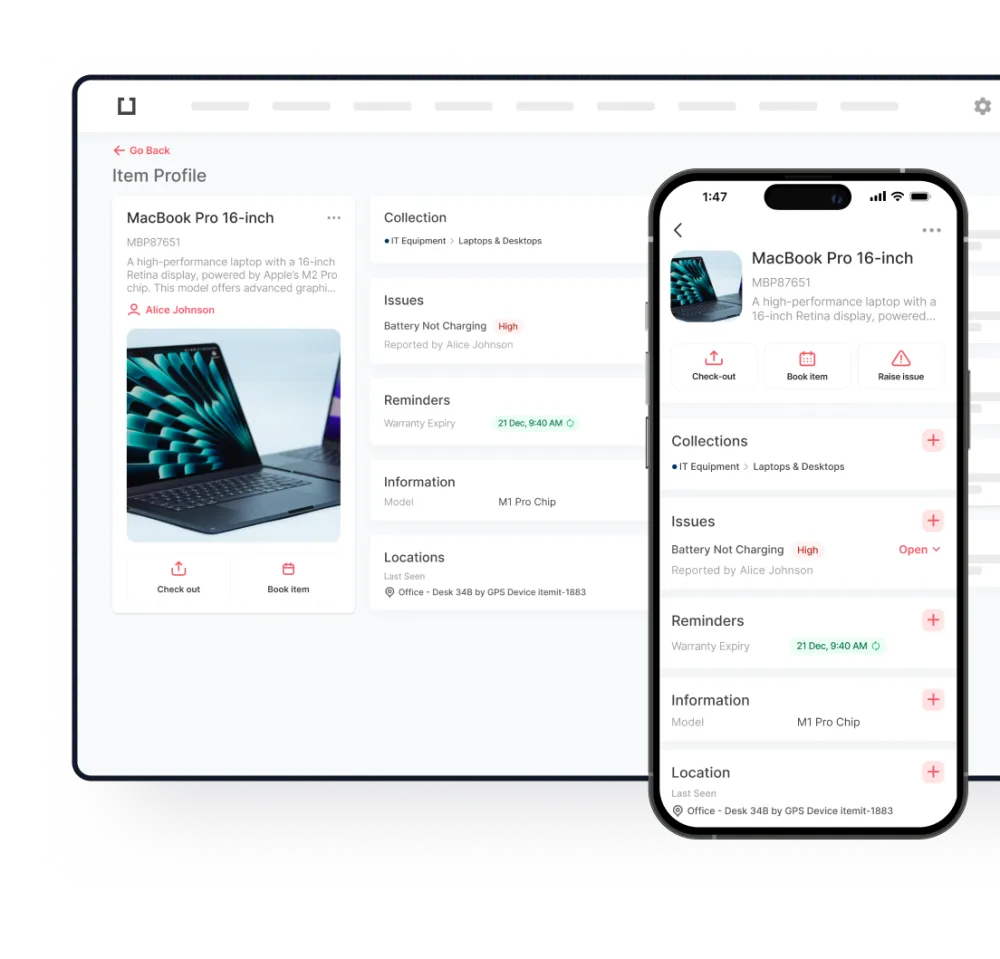
IT asset management software works by allowing you to log unique, digital asset profiles onto a system. These profiles will correspond with your list of physical assets.
In other words, each of your laptops, phones, and computers will have its own unique asset profile, allowing you to log unique asset data against the assets themselves.
Therefore, if one of your assets has an issue, you'll be able to report this issue against the actual asset. This shows your maintenance team specifically which asset has a problem, where it is, and what the problem is.
Your asset list also creates and maintains an up to date IT asset register, which you can then export for better insurance and tax operations, alongside any number of other business operations.
Using Asset Tags To Track Your Assets
You can speed up the discovery of assets on your system by pairing asset tags with your asset tracking software. Asset tags are physical tags, likely a QR code or barcode, which you stick onto your assets.
These tags can then be scanned to communicate with your software. Whenever you scan an asset's tag, the corresponding asset profile will open. Therefore, if you notice an asset has an issue, you'll be able to scan the tag and report the issue with ease.
 Watch video
There are also tagging features that help you audit your assets and track their locations. Every time you scan an asset's tag, the last seen location will update automatically, and you can bulk scan assets in a room to ensure that everything is where it should be.
Audits are much faster and much simpler with this process, as all you need to do is press a button and scan your IT assets' tags to create an accurate audit trail.