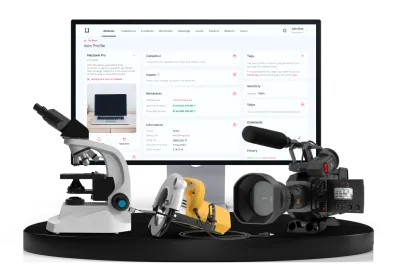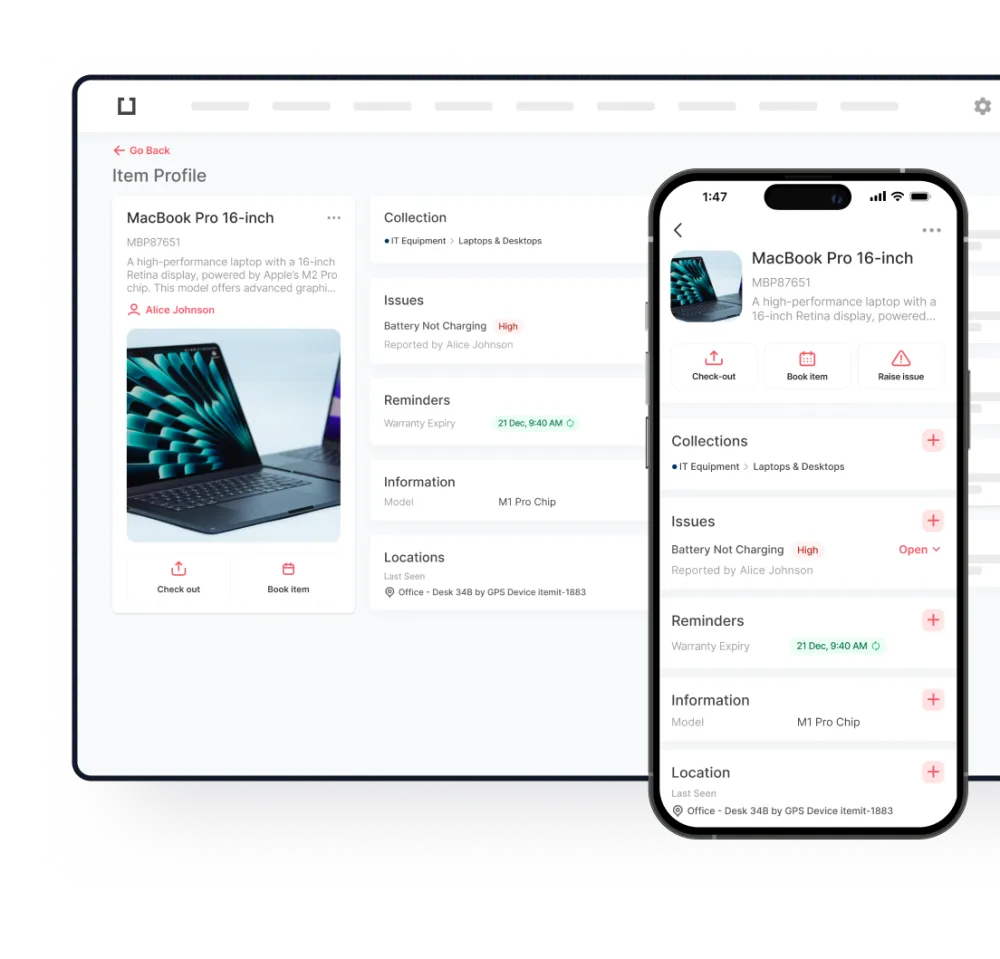
Asset register software gives you a more automatic way to manage your assets and their data. It has an edge over spreadsheets as, instead of editing singular cells, you edit and manage asset data within a profile of that asset.
In other words, you'll be able to add asset issues, bookings information, and location data against the assets themselves to save this data from getting lost in a large spreadsheet.
An asset register is effective at preventing asset losses and duplicate purchases, but only if your data is visible, usable, and editable.

The Benefits Of Asset Register Software
Asset register software gives you many benefits, including an automated way to track and manage your assets.
So, if you're using asset register software for IT asset management, you'll be able to log each laptop as an individual profile. If you're creating a school asset register, you can add PAT test information and reminders against specific assets.
Overall, this saves you time as you can create effective and speedy asset operations using your asset register software. You also save money, too, as the clarity and transparency you get from asset register software reduce risks, such as the risks of ghost and zombie assets.
So, when should you use asset register software?
When Collecting Asset Data
First of all, you should use asset register software when interacting with assets and collecting data. This can be daily operations or weekly audits, for example.
As asset register software has helpful, dedicated features it will speed up these operations and take out much of the manual work involved. For example, if you want to report that an asset has an issue, you need only click one button.
Asset tags can help with this too. Asset tags are physical tags that you can stick onto your assets and link with their digital counterparts. Then, every time you scan an asset's tag a few things happen:
- The asset's profile opens, ready for edits
- The asset's last seen location updates (using your phone's GPS)
- The user who scanned the tag is logged
- The time of the scan is logged
This speeds up data collection, asset interactions and automates asset location tracking in the process, giving you a clear audit trail.
 Watch video