IT asset management software gives you more clarity and control over how your assets are behaving. It's useful in many contexts, including when you're onboarding when you're working from home, and when you're tracking fixed assets.
Overall, IT asset management software saves your business time and money. When you have control and visibility over your assets, you can take them further and get the most use out of them possible.
You'll also lose fewer assets, purchase fewer duplicates and ensure that your colleagues have everything they need to fulfil their responsibilities successfully.

How Does IT Asset Management Software Work?
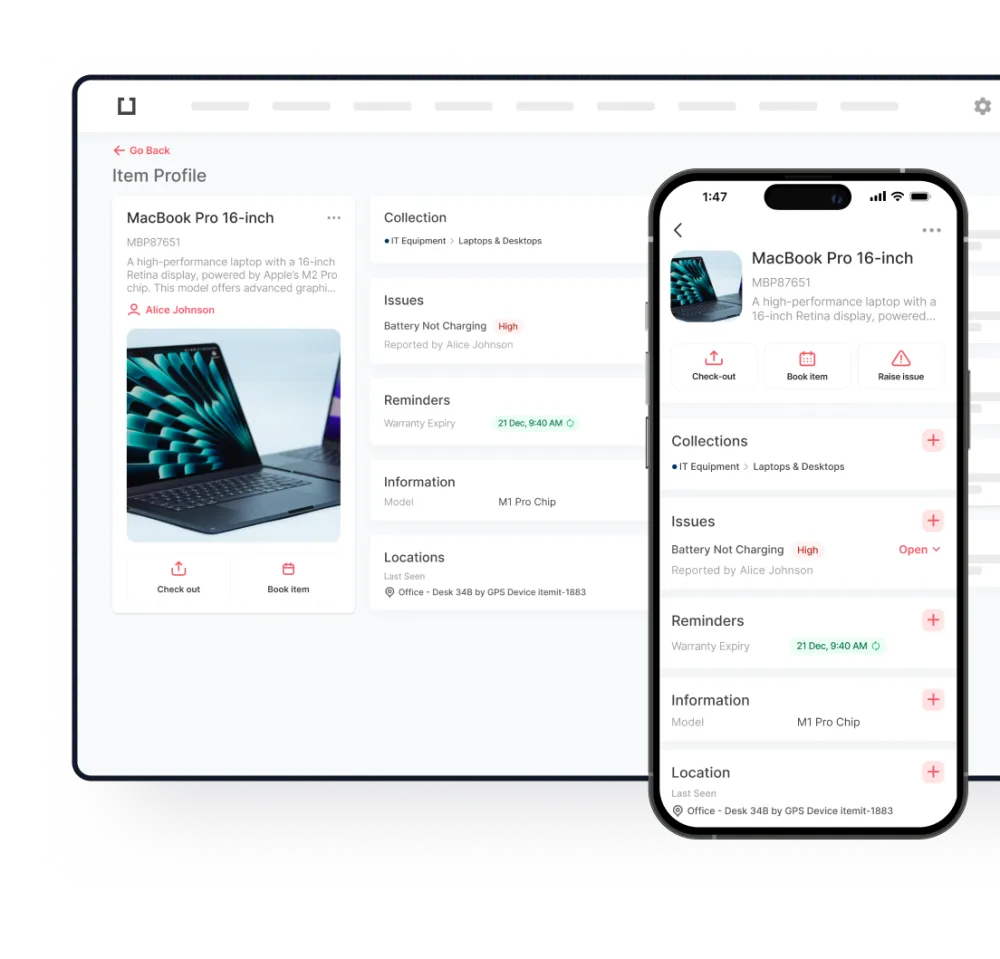
IT asset management software allows you to log assets as unique profiles, similar to on social media. You can then populate these asset profiles with asset critical information.
So, for example, you can log a desktop, add PAT test dates, log who is responsible for it, and report issues if and when you need to.
The ability to log unique information against unique assets opens up a world of possibilities. Not only do you have more clarity and control over your things, but all of the data is also pulled into an automated report, giving you more visibility over how all of your assets are behaving.
These reports are powerful, customisable and exportable, giving you the clearest view over how your assets are behaving as possible.
Hardware Asset Management
Hardware asset management is the process of tracking and managing your hardware. Your hardware will be your laptops, desktops, phones and so on and so forth.
Therefore, you need to track physical attributes and information, such as make and model, location, and user info. Some of these fields may overlap with your software, but you'll save money in different ways.
The ability to use asset tags gives you the fastest way possible to update asset locations and information. To log updates, simply scan the asset's tag. The last seen location automatically updates, as well as the time of the scan and the user who scanned the tag. The asset's profile also opens, ready for edits.
So, for example, if you notice one of your assets has a cracked screen, the process of reporting this is simple. Scan the tag, click a button, type the issue and hit save. After that, your team will receive an email telling them which asset is damaged, where it is, and who is responsible for it.