If you have ever wondered what people mean when they say software is “in the cloud”, you are not alone. The phrase is everywhere — from IT proposals to sales pitches — but it is rarely explained simply. This guide cuts through the jargon and explains exactly what cloud-based software is, how it compares to traditional on-premise systems, and why it matters when you are evaluating tools like asset tracking software for your organisation.
What Is Cloud-Based Software? A Plain-English Guide
By Dr. Alex Wong
Published on April 17, 20267 min read
Back to Blog
Cloud-based software is any application that runs on remote servers hosted on the internet, rather than being installed directly on your own computer or a local server at your premises. You access it through a web browser or a mobile app, and all of your data is stored, processed, and backed up by the provider in a secure data centre.
Instead of buying a one-off software licence and installing it on a machine you own and maintain, cloud software is typically sold as a subscription. The provider takes care of the hardware, updates, security patches, and infrastructure. You simply log in and use it.
Common everyday examples of cloud-based software include:
- Google Workspace — Docs, Sheets, and Gmail, all running in your browser.
- Salesforce — A customer relationship management (CRM) platform with no local installation required.
- Xero — Cloud-based accounting software used by small and mid-sized businesses.
- itemit — A cloud-based asset tracking platform that lets teams manage physical assets, inventory, and maintenance from any device.
How Does Cloud Software Work?
The mechanics are simpler than they sound. When you use cloud-based software, your inputs (typing, scanning a barcode, uploading a document) are sent over the internet to the provider’s servers. Those servers process your request, update the database, and send the result back to your screen, all within milliseconds.
This architecture has three key components:
- Frontend — The interface you see and interact with, delivered through your browser or app.
- Backend servers — The provider’s computers that run the application logic and store your data.
- Database — Where all your records are stored, replicated, and backed up across multiple data centres for redundancy.
Because the data lives in the cloud, any authorised user can access it from any device with an internet connection. If a field engineer scans an asset using a mobile app, the update is immediately visible to the finance team in the office looking at the same dashboard.
Cloud-Based vs On-Premise Software: Key Differences
The biggest decision most organisations face when selecting enterprise software is whether to choose a cloud-based (SaaS) solution or an on-premise system. Here is a direct comparison across the factors that matter most:
What Is SaaS, and How Does It Relate to Cloud Software?
SaaS stands for Software as a Service. It is the most common delivery model for cloud-based software, and the terms are often used interchangeably — though they are not quite identical.
All SaaS software is cloud-based. Not all cloud software is SaaS (some cloud solutions still require local client installation). For practical purposes, when a business says it is evaluating “cloud software”, it almost always means SaaS.
Under SaaS:
- You pay a recurring subscription (monthly or annually) per user or per seat.
- The provider hosts, secures, updates, and maintains everything.
- You can typically scale up or down without major procurement decisions.
- No specialist IT infrastructure is required on your side.
The 6 Core Benefits of Cloud-Based Software
1. Lower Upfront Cost
On-premise software requires significant capital expenditure: server hardware, licences, IT installation, and ongoing maintenance contracts. Cloud software replaces that with a predictable monthly or annual subscription. For small and mid-sized businesses, this makes enterprise-grade tools accessible without large capital investment.
2. Automatic Updates
When the provider releases a new feature or security patch, it is applied to all users simultaneously, without any action required from you. You always have the latest version. There is no need to schedule downtime or manage version upgrades internally.
3. Access From Anywhere
Cloud software runs in the browser or app, not on a specific machine. Your team can access it from the office, at home, on-site at a client location, or from a mobile phone in a warehouse. This is particularly valuable for field teams and multi-site organisations.
4. Real-Time Collaboration
Because all users access the same live database, everyone sees changes the moment they happen. In asset tracking, this means a technician checking out equipment in Manchester instantly updates the live register visible to operational managers in London.
5. Scalability
Scaling cloud software typically requires nothing more than adding a user seat to your subscription. Scaling on-premise software may require new hardware, additional licences, and IT project planning. Cloud solutions grow with your business without infrastructure overhead.
6. Built-In Backup and Disaster Recovery
Reputable cloud providers store your data across multiple geographically distributed data centres. If one data centre fails, another takes over automatically. For most organisations, this level of redundancy is impossible to replicate on-premise without substantial investment.
Is Cloud-Based Software Secure?
Security is the most common concern raised by organisations evaluating cloud software — particularly those moving from on-premise systems where “everything stays on our servers”. The reality is more nuanced.
Reputable cloud providers invest in security at a scale that most individual organisations cannot match:
- Data encryption in transit (HTTPS/TLS) and at rest (AES-256 or equivalent).
- Multi-factor authentication (MFA) to protect login credentials.
- Role-based access controls so users only see data they are authorised to access.
- Continuous monitoring for anomalous access patterns and intrusion attempts.
- Compliance certifications such as ISO 27001, SOC 2 Type II, and GDPR compliance frameworks.
The risk most organisations underestimate is not the cloud provider being breached — it is the local server running out-of-date software, an unpatched vulnerability, or a hard drive failure with no offsite backup. Cloud infrastructure is typically more secure than an average on-premise setup for the same cost.
Why Cloud-Based Software Matters for Asset Tracking
For organisations managing physical assets — tools, equipment, IT hardware, medical devices, vehicles — the choice between cloud and on-premise has direct operational consequences.
A cloud-based asset tracking system like itemit gives you:
- Real-time location and status updates from field staff scanning barcodes or RFID tags via a mobile app.
- Central visibility across multiple sites, depots, or office locations — all from a single dashboard.
- Instant audit trails for who checked out what asset, when, and where it was last seen.
- Automatic depreciation tracking tied to each asset’s usage history.
- Integration with existing systems (accounting, ERP, facilities management) via API.
An on-premise asset management tool, by contrast, often requires users to be on the same local network or VPN to access records. Field staff cannot update asset status in real time unless they are connected to the organisation’s internal systems. This creates the gaps — lost assets, ghost records, outdated registers — that cloud software eliminates.
Common Misconceptions About Cloud Software
“We will lose control of our data.”
Your data remains yours. Reputable providers offer data export tools, contractual data ownership clauses, and clear data processing agreements under GDPR. You can extract your data at any time.
“Cloud software does not work without the internet.”
Some cloud-based tools offer offline modes for mobile apps, syncing when connectivity is restored. For most business tasks, internet access is already a prerequisite — email, video calls, and file sharing all require it.
“On-premise is always cheaper long-term.”
Total cost of ownership calculations often underestimate on-premise costs: server hardware refresh cycles (typically every 3–5 years), IT staff time for maintenance, software licence renewals, and the cost of downtime during upgrades. Many organisations find cloud subscriptions cost-competitive or cheaper over a 5-year horizon once all costs are factored in.
The Bottom Line
Cloud-based software has become the default choice for most business applications because it eliminates the infrastructure overhead, delivers continuous updates, and gives teams anywhere-access to live data. For organisations evaluating their options — particularly in asset tracking, inventory management, and fixed asset registers — the operational advantages of cloud over on-premise are substantial.
itemit is a cloud-based asset tracking platform built for organisations that need real-time visibility of their assets, without the complexity of on-premise installation. Book a free demo to see how it works, or start a 14-day free trial — no credit card required.
Frequently Asked Questions
What is cloud-based software?
Cloud-based software is any application hosted on remote servers and accessed through the internet, rather than installed on a local computer or on-premise server. Users log in through a browser or app, and all data is stored and processed in the cloud. Examples include Google Workspace, Salesforce, and itemit.
What is the difference between cloud and on-premise software?
On-premise software is installed and run on servers within your organisation — you own and manage the hardware, security, and updates. Cloud software is hosted by a third-party provider and accessed via the internet. Cloud typically has lower upfront cost, automatic updates, and anywhere access, while on-premise gives more direct control over data location.
Is cloud-based software safe?
Yes. Reputable cloud providers invest heavily in enterprise-grade security, including encryption (in transit and at rest), multi-factor authentication, regular security audits, and compliance certifications such as ISO 27001 and GDPR. For most businesses, cloud security exceeds what is achievable with internal IT infrastructure.
What is SaaS?
SaaS (Software as a Service) is the most common cloud delivery model. Instead of buying a software licence and installing it locally, you pay a subscription and access the application through a browser. The provider handles all infrastructure, maintenance, and updates. itemit is a SaaS platform for asset and inventory tracking.
Why should asset-tracking software be cloud-based?
Cloud-based asset tracking gives your whole team real-time visibility of asset locations and status, from any device, anywhere. When a field engineer books out equipment or a warehouse manager updates stock, everyone sees the change instantly. On-premise tools cannot offer this without expensive VPN and server infrastructure.

Article By Dr. Alex Wong
Dr. Alex Wong is the CEO & Co-Founder of RedBite Solutions, a spin-out from the University of Cambridge and creators of itemit.
Article By Dr. Alex Wong
Dr. Alex Wong is the CEO & Co-Founder of RedBite Solutions, a spin-out from the University of Cambridge and creators of itemit.
Choose a better way to track your assets.
Start your trial. 14 days. No risk. No credit card.
Our latest blogs
Stay ahead with the latest industry insights, asset tracking tips, and expert advice for efficient management.

Resources
How to Stop Tool Theft and Loss: Construction Tool Tracking Guide
Tool loss costs construction businesses thousands in replacement costs and lost project hours. Learn how to stop tools being stolen from vans, how to stop losing equipment on site, and how a tool tracking app combined with physical security keeps your gear safe.
Read article →

Resources
How to Reduce Equipment Downtime in Manufacturing
When a production line stops without warning, every minute carries a cost. Lost output, idle staff, late shipments, scrap from interrupted runs. A 2025 Censuswide survey of over 600 senior decision-makers and maintenance professionals found that unplanned downtime costs larger UK manufacturers an average of £1.36 million per hour - with total losses across the sector hitting £736 million every week.
Read article →
Resources
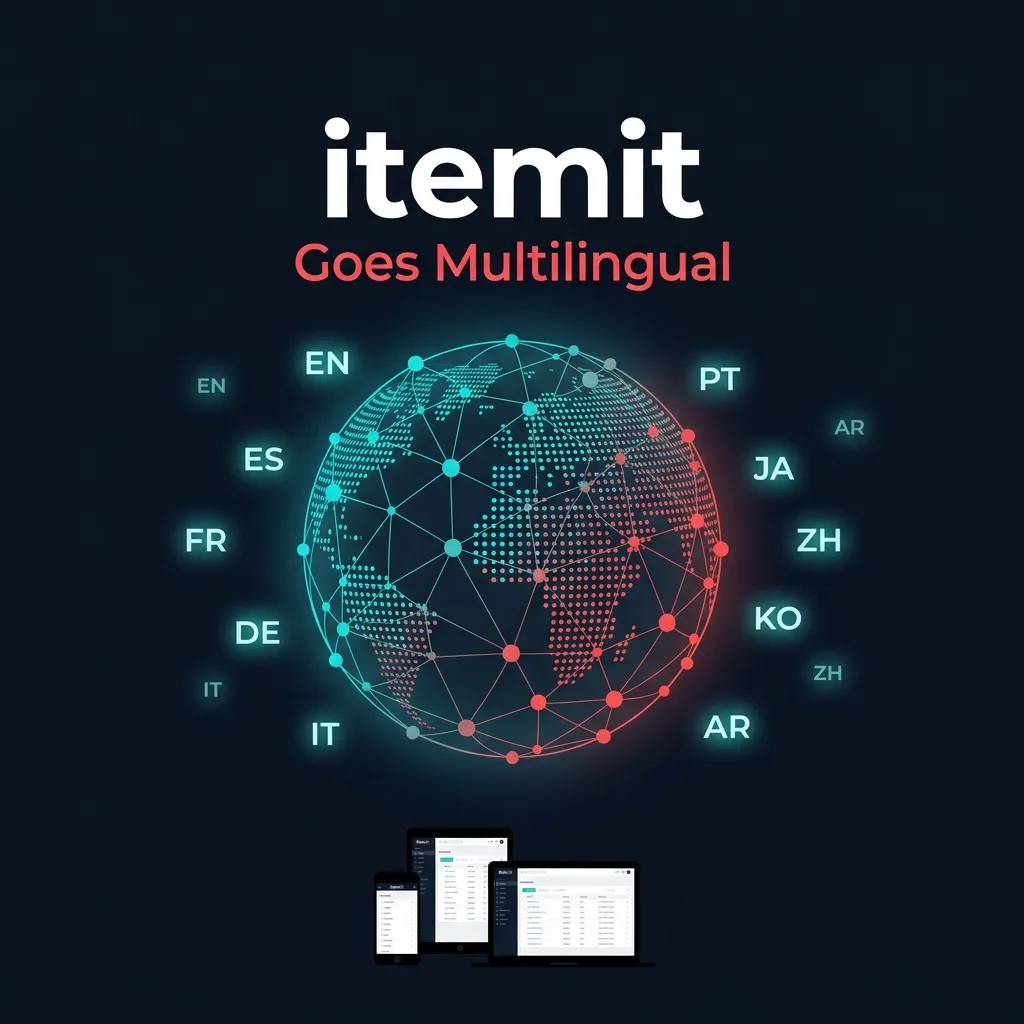
itemit Goes Multilingual: Asset Tracking in Your Language
itemit now supports multiple languages across Web, iOS, and Android. Discover how multilingual asset tracking helps global teams onboard faster, reduce errors, and boost adoption.
Read article →
| Feature | Cloud-Based (SaaS) | On-Premise |
|---|---|---|
| Upfront Cost | Low — subscription model, no hardware purchase required. | High — server hardware, software licences, and IT setup costs. |
| Access | Anywhere — browser or mobile app, any device, any location. | Restricted — typically requires local network or VPN connection. |
| Updates | Automatic — provider deploys updates with no action from you. | Manual — your IT team schedules and applies updates with potential downtime. |
| Scalability | Easy — add user seats via subscription; no hardware changes. | Complex — new server capacity, licences, and IT project required. |
| Security | Enterprise-grade — ISO 27001, SOC 2, encryption, MFA built-in. | Varies — depends entirely on quality of internal IT infrastructure. |
| Data Backup | Automatic — multi-region redundancy managed by provider. | Manual or custom — requires dedicated backup systems and processes. |