Check-in check-out software helps you save time and money by allowing you and your colleagues to track and manage their assets with much greater ease.
With equipment checkout software, you can manage your assets alongside your colleagues and see who has access to which assets at a glance.
Effective equipment check-out software doesn’t allow for double bookings, so you don’t have to worry about asset losses or administrative errors. Find out more about how the systems work here.

What is Check In and Check Out?
Check-in and check-out are critical functions in asset management systems that facilitate item allocation and return.
Check In: This is the process of returning an object to its storage or system after use. When an asset is checked in, the system is updated to reflect that the item is now available for others to utilise. This phase usually includes recording the return time, the asset's condition, and the identification of the individual returning it.
Check Out: This process occurs when an item is removed for use. During the check-out process, the system captures information such as which asset is being borrowed, by whom, and when it is anticipated to be returned. This helps to monitor the item's availability and guarantees that it is returned on time.
How Does Check In Check Out Software Work?
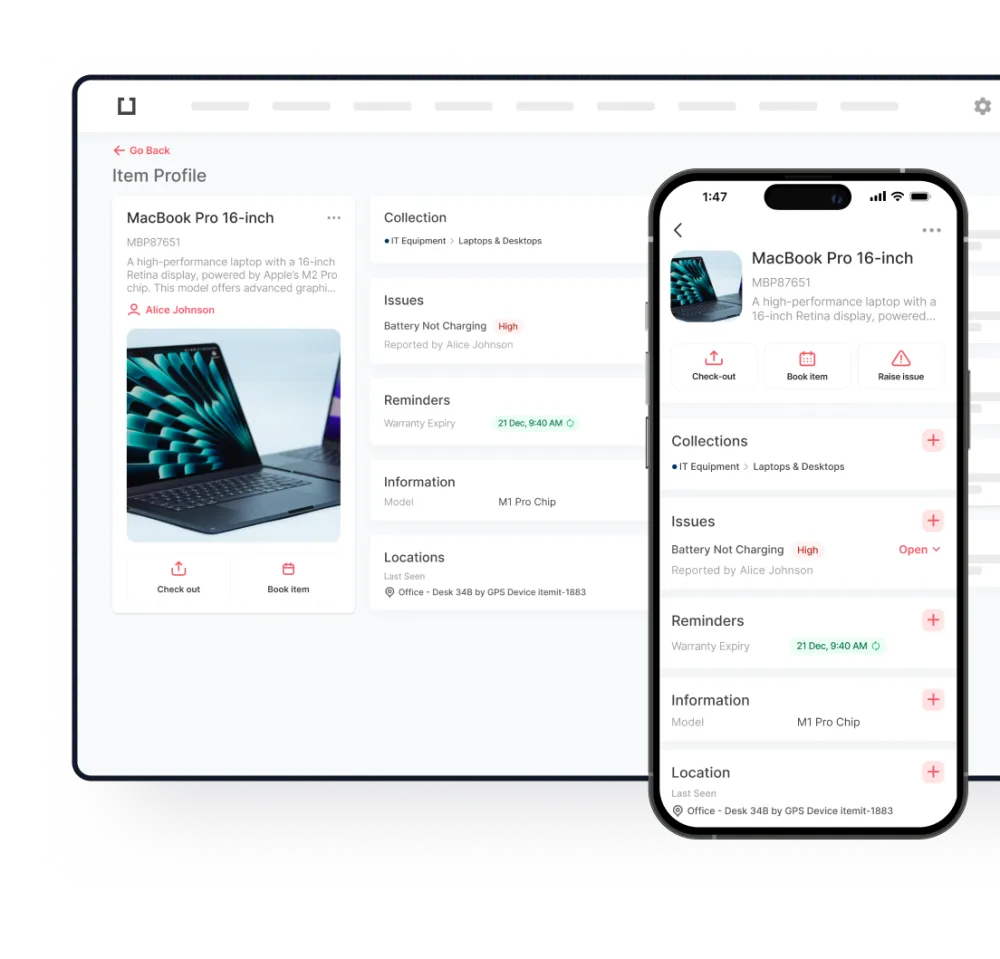
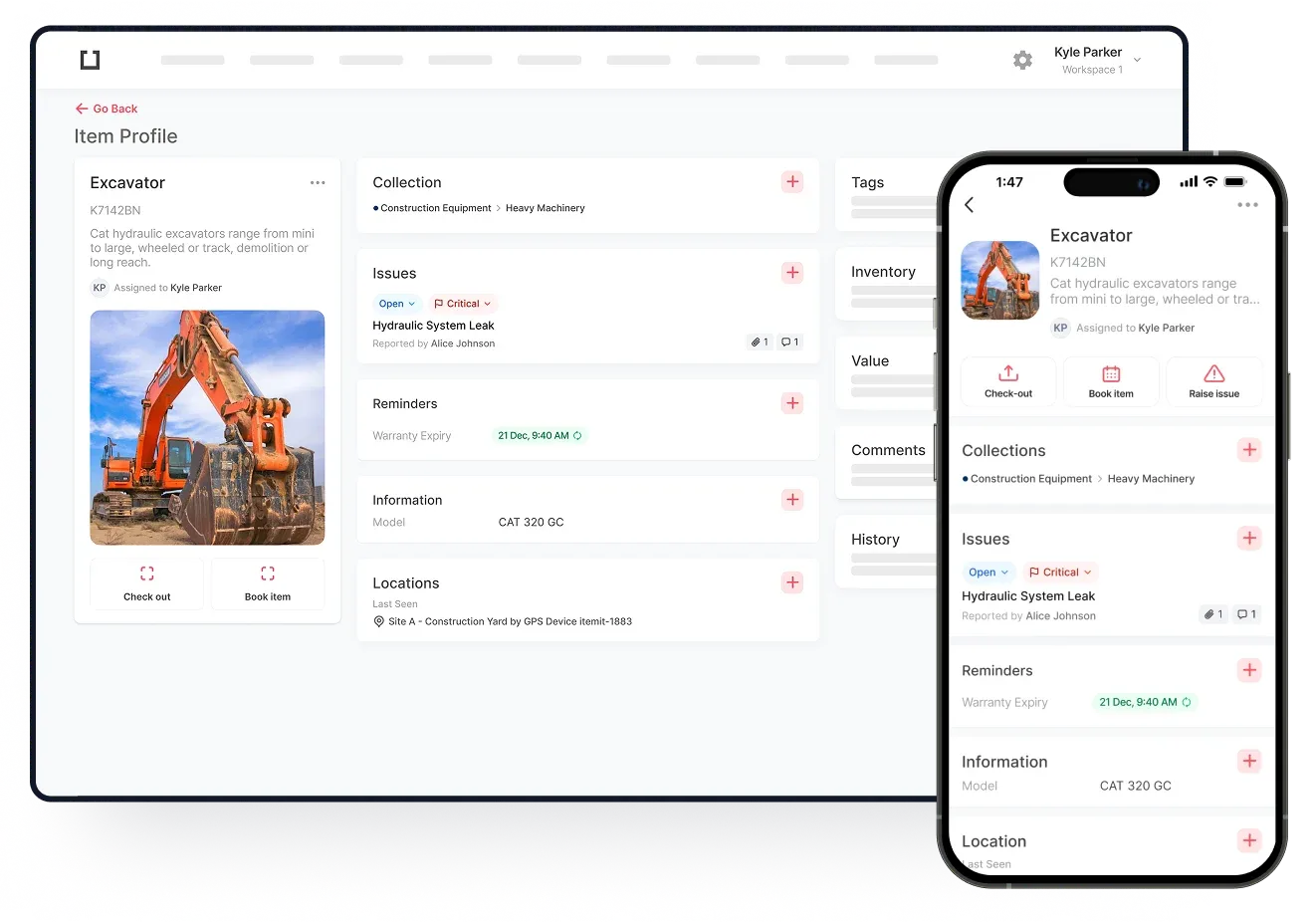
Check-in check-out software allows you to create individual asset profiles. You can then add specific data and information to these profiles that you can track and manage.
We can say that check in check-out software is a type of asset tracking software. Asset tracking software is a type of programme that gives you the ability to monitor where your assets are, how they’re behaving, and who has access to them.
As such, check in check out software is an extension of this. Check in check out system allows you to monitor unique assets and their movements through a building or with your colleagues, giving you a tidy audit trail of who it is with and how it is being used.
This software enhances transparency and control over business assets by offering real-time visibility into asset status and detailed usage tracking. Knowing how to use check-in check-out software effectively allows businesses to log every asset movement, creating a comprehensive audit trail that reduces the risk of misplacement and irregular usage.
Furthermore, the software automates essential processes, such as setting alerts for overdue returns and scheduling maintenance, which strengthens control over asset management. Detailed reports generated by the software also provide valuable insights into asset utilization, enabling better decision-making and optimal resource allocation.
In summary, the check-in software's ability to track and manage assets in real-time, combined with its reporting capabilities, enhances both transparency and control, making it a vital tool for efficient asset management.
Preventing Double Bookings of Asset Items
Effective asset management depends on check-in and check-out systems, especially in relation to double booking avoidance. As follows:
Check-in software offers first and most importantly real-time asset tracking. The system instantly changes its availability status whenever an asset is checked out, Therefore ensuring that no other user can try to reserve the same item till it is returned. This checkout system keeps accurate records of available and current use of various assets.
Apart from real-time updates, check in systems sometimes incorporate a reservation management capability. This lets users label assets as inaccessible for others automatically during designated times, therefore reserving them for a particular use. The programme guarantees that every asset is reserved just by one user at a time by avoiding overlapping bookings.
Conflict detection is yet another absolutely vital ability. Users of the check out system are supposed to be alerted should they try to reserve an asset already checked out or reserved. This automatic alert system prevents multiple bookings before they happen multiple bookings, therefore saving time and preventing possible problems.
At last, check in software centres all asset data, offering a comprehensive picture of present bookings, reserves, and asset availability. This centralised technique helps to control several assets effectively and lowers mistakes.
Check-in check-out systems are essentially a necessary tool for asset management since they provide real-time updates, manage reservations, detect conflicts, and centralise data, so preventing double bookings of assets.