Hardware asset management is an effective way to track and manage a range of your business' IT assets. With an effective hardware asset management system, you can simplify your asset audits and asset tracking operations.
When you use asset management systems, you:
- Save time
- Save money
- Lose fewer assets
- Purchase fewer duplicates
- Avoid asset accounting risks
- Gain control of your assets
This is because you have more visibility and control over your entire asset register.

What Is Hardware Asset Management?
Hardware asset management is a subset of IT asset management. IT asset management is a set of operations that include logging, tracking and managing any of your business' assets that have IT capabilities.
In this sense, you can log software, laptops, and phones into an IT asset management software.
Hardware asset management is the same, only with hardware specifically. So, hardware asset management operations won't involve subscription renewals in the same way that software asset management may. However, password information may be logged whether you're tracking software or hardware.
So, any IT asset management operations may overlap with one another, but some operations may be asset-specific, which is why specifying the type of asset is important.
Logging Hardware Assets In Asset Tracking Software
Your hardware asset management system will be a type of asset tracking software. The benefit of using asset tracking software as opposed to a tailored hardware asset management system is that asset tracking software is more customisable and malleable.
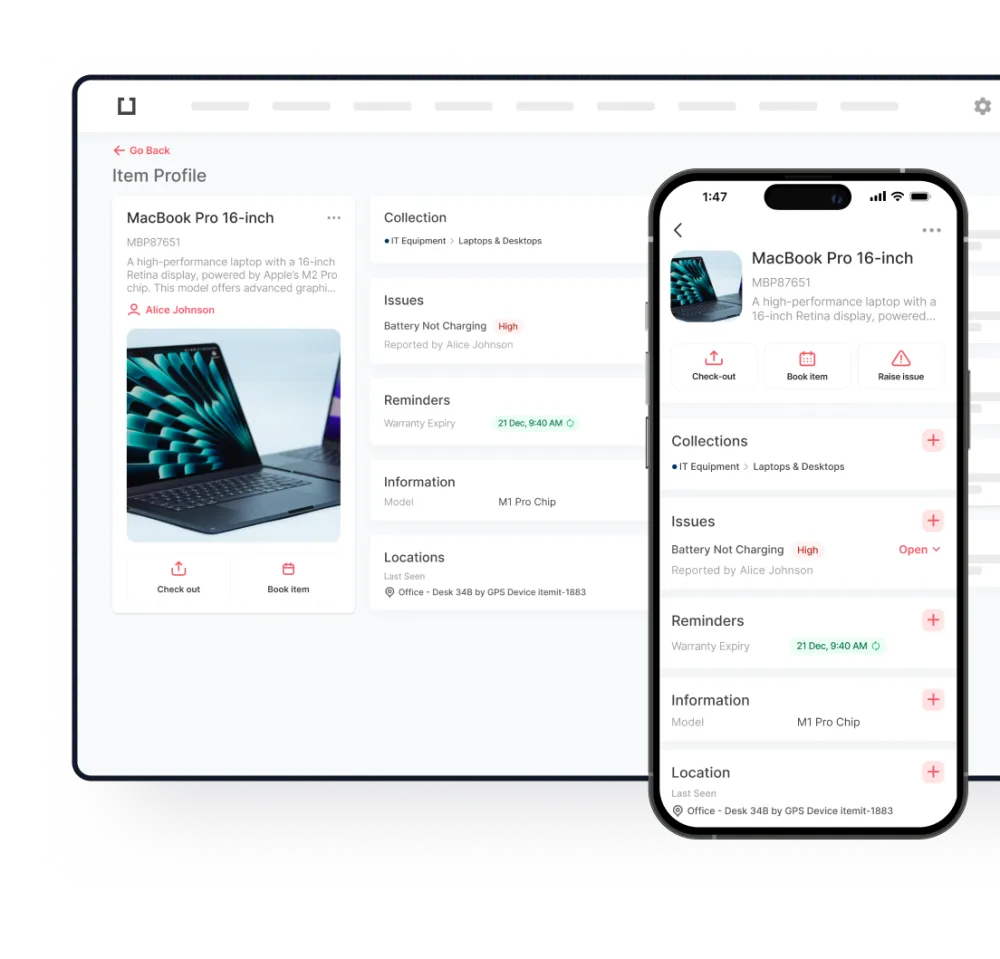
So, you can start by logging your laptops, phones, and other IT hardware as unique asset profiles. Each asset has its own profile, differentiating one laptop from another. This way, if one laptop gets scratched, logging, identifying, and fixing the issue is a lot simpler if you know which laptop has the issue.
Then, with asset tracking software, you can scale your asset usage to include fixed assets, software assets, and more. You can keep your hardware assets separate by using a collections feature.
 Watch video