There are a few things you need to know when you're deploying your asset tracking software. These are key to your success, as, with a successful deployment, you will be able to:
- Save time
- Save money
- Maintain an accurate fixed asset register
- Lose fewer assets
- Track your colleagues' usage of assets.
Overall, how you deploy your asset tracking software across your business, no matter how big or small the business is, helps you save time and money sooner.

Populate Your Asset Register
First of all, you'll need to populate your asset register. This is the process of logging your assets and formalising the information you're adding to them.
If you already have a fixed asset register in the form of a spreadsheet, you'll be able to have this imported onto your system. This way, you can be up and running in no time.
Here, you can decide what naming conventions to assign to your assets. For example, do you need to know if your IT assets are laptops, or do you need to add the make and model to the asset's name?
Then, you'll be able to use bulk editing features to formalise reminders and information, such as PAT test dates, to your assets.
Use Asset Tags
Asset tags speed up your operations greatly and allow for automatic location tracking. Every time you scan an asset's tag, a few things happen.
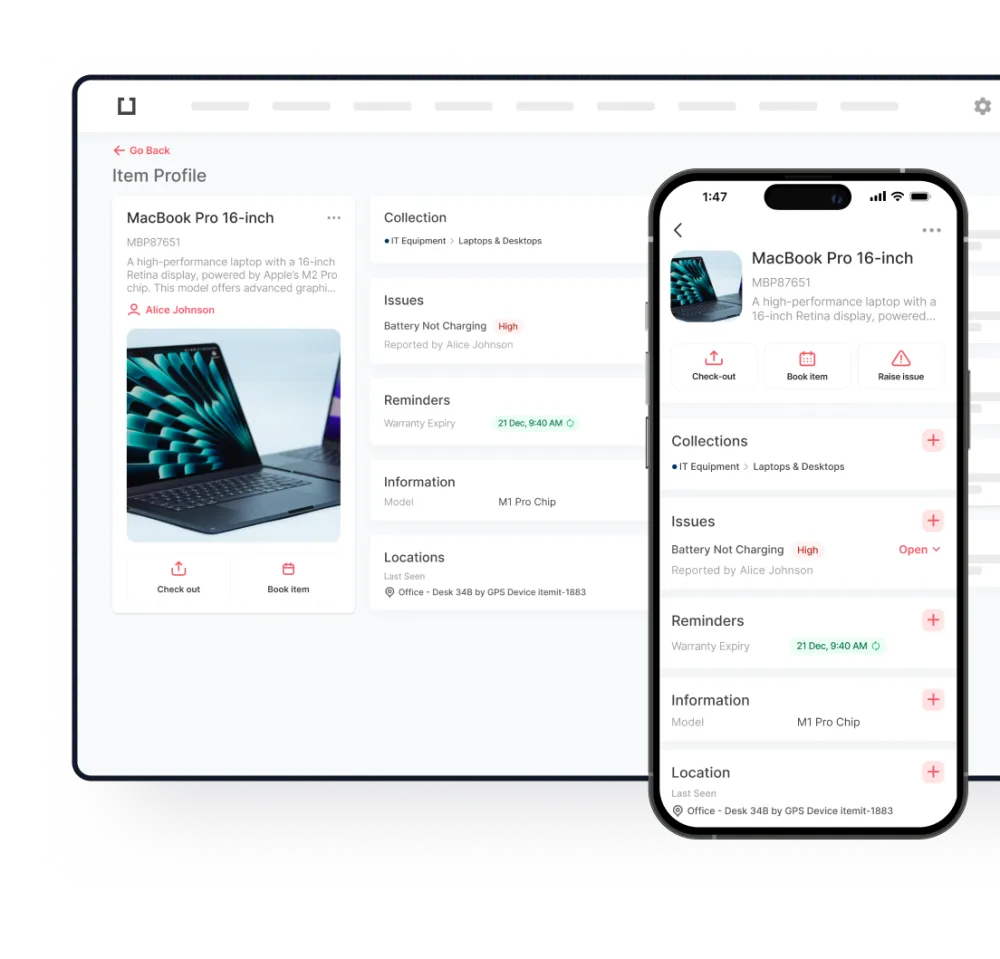
First of all, the asset's profile will open. This means that if you're using your software for tools and equipment tracking, if you've logged a spanner, when you scan a tag attached to the spanner, the corresponding digital profile will open. Then, you'll be able to update maintenance data and add comments, for example.
Every time you scan an asset's tag, the last seen location, time of scan and user who scanned the tag will also update and will be visible on a map. This way, you can create more accountability over your asset register by tracking where your assets have been and who has been interacting with them.
 Watch video