All organisations have assets that they depend on. Being able to manage assets is an integral part of running an organisation. The right type of Asset Management system allows tools and equipment to be located in moments. Additionally, it can also help speed up maintenance while reducing costs.
There are many benefits to Asset Management, some of which can be found below:
Increased Visibility
Like most organisations, yours undoubtedly has multiple assets. Every asset that you own has a purpose and is, therefore, valuable. As your organisation continues to grow, so too will your assets. It’s imperative then that you understand where all of your assets are at all times.
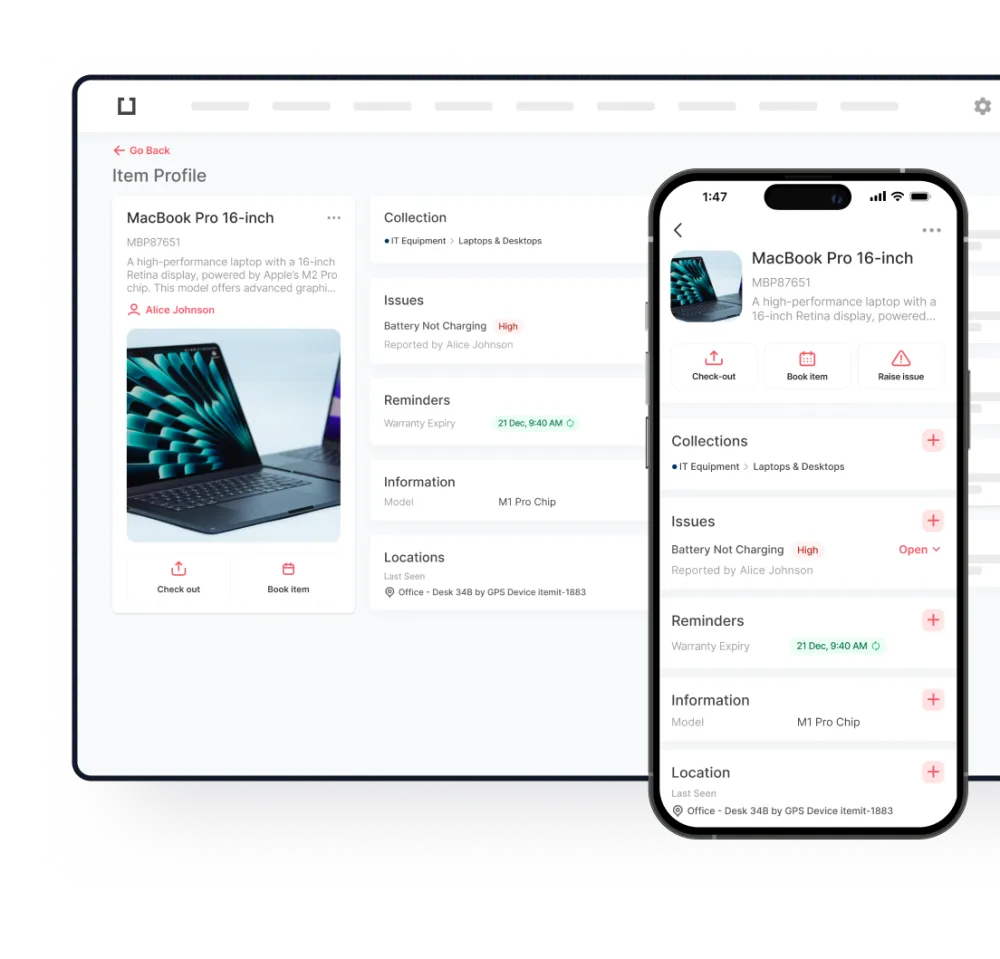
When you use itemit’s asset tracking software, all of your assets are discoverable. This is thanks to the RFID or QR codes that are attached to the assets. Once the assets are entered into the system, the software creates a centralised database. The database will contain information about the asset’s location, status, date of purchase, original cost, ID number, warranty, and other inputted details.
With increased visibility comes increased knowledge and understanding about every single asset. In some respects, this information is priceless.
Tracking in Real Time
Equipment, tools, vehicles, and machinery can be tracked in real time using GPS trackers, or alternatively see a last seen location using itemits QR tags. Continuous data allows organisation managers and owners to ascertain where all of their assets are. This allows for greater asset security and better asset management at all times.
 Watch video
Eliminating Ghost Assets
Assets that have been lost or stolen are known as “Ghost assets”. Without the use of tracking software, assets such as these often remain unaccounted for. Additionally, there may be occasions when ghost assets are inaccurately recorded as being present. When this occurs, there are fewer tools for users to work with. Secondly, ghost assets that are still insured cost organisations money that could be better spent elsewhere.
The right Asset Management allows organisations to identify and eliminate ghost assets easily. Not only will this help to reduce superfluous insurance payments, but it can help organisations to understand the true worth of their assets. Finally, when an asset is identified as being a ghost asset, replacements can be purchased if required.