Avoid this risk entirely by handling your IT hardware inventory management through asset tracking software.
What is IT Asset Tracking Software?
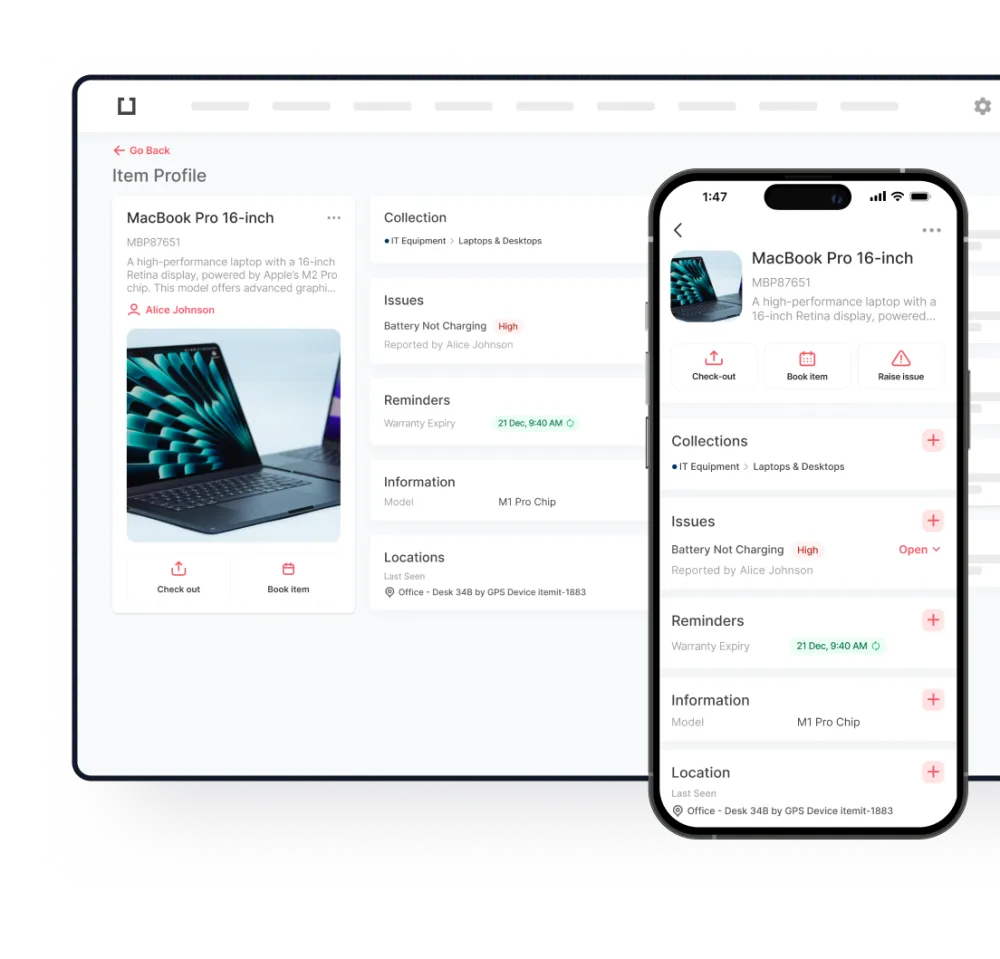
IT asset tracking software is an application that gives access to an interface that allows users to view and update information about assets. This is possible through a network of tags that send information back to a central database.

Top Features of IT Asset Tracking Software
There are a lot of applications for IT asset tracking software. The value you can get out of tracking IT hardware will depend largely on the types of equipment being used. For example, if you have a lot of people out on the road with laptops, then location tracking will be a high-value feature.
As we go through some of the features of IT asset tracking, think about how each could work in your organisation!
Extend the Lifespan of Your IT Equipment
At the centre of any IT asset management strategy is an effective maintenance schedule. With IT hardware inventory management from itemit, the relevant people will receive a notification when hardware requires servicing. This extends the lifespan of the hardware and makes sure that you are compliant with any insurance agreements.
Trying to manage this with excel, or with some other means that relies on manual input, is possible to an extent. However, this approach creates a lot of admin and is prone to create human error. This can have an accumulative effect as you scale up which can develop into a serious operational issue. Using IT asset tracking software means you can create an automated schedule that reduces repair costs and reduces the impact of depreciation.
Track IT Hardware’s Location
IT hardware is expensive, when an IT asset does go missing, it is a big deal. Knowing where your equipment drastically reduces the chances of unexplained losses.
IT asset tracking software will tell you the exact location of all hardware. So, you have control and insight over your valuable assets.
With tracking, you are more likely to be able to retrieve an asset when it goes missing. At the very least, you will be able to investigate the loss effectively. You’ll know where the asset was last seen and who was last in charge of it!

Track the Condition of IT Hardware
Using asset tracking, it is possible to keep a log of the condition of your IT equipment. There are a few ways to go about this. The simplest is to make a status update part of your checking in and out process. This requires a manual input, but it is also possible to automate this to a degree- it just depends on the level of functionality you require.
This feature motivates users to take care of your assets and helps you to get ahead of breakdowns before they happen.
Assign IT Hardware
Making sure your employees have the equipment they need to do their job to the highest possible standard is a basic standard for successful companies. IT asset tracking means that you can see at a glance that everyone has what they need to get the job done!
Assigning hardware also makes staff accountable for the equipment, which reduces the risk of losses and breakages.
Book IT Equipment in Advance
Having an excess of IT equipment is one way of ensuring that everyone has what they need at any one time. However, in the ideal world, a business would only have the IT equipment it needs to operate optimally. With itemit, it is possible to see what equipment you will need ahead of time, meaning you will know when you need to invest in new equipment. More than that, you will know exactly how much you need to invest.
Ultimately, the ability to see what IT equipment is available ahead of time and assign it to a user or job, enables you to get ahead of costly errors.
Easily Find IT Hardware Info
This is a powerful feature that is available through IT hardware inventory management. Through tagging and tracking, you can add pretty much any information to an asset. This can be static, so it always stays the same, or dynamic so that it can be updated by a user. Static information would include purchase date, value and the like. Dynamic info includes
With IT equipment, warranty and insurance information can be easily assigned to an asset. This means that when something does go wrong, you can deal with it without an unnecessary back and forth with the manufacturer or trawling through emails!
It’s easy to imagine the kind of insight and control that is possible by taking advantage of asset tracking. Whatever info is important to your organisation, there is an opportunity here to streamline your asset management through gaining access to files that are relevant to your assets.
Check IT Equipment In and Out
Using tagging technologies, it is possible to see who has ‘checked-out’ assets and when. This is without relying on complicated spreadsheet or paper filing systems. Keeping a tight grip on your assets is just good practice if you want to maximise the value of your investment.
It’s not about creating a ‘big brother’ culture. It’s about showing that you value your equipment, which shows your staff and your clients that you are diligent and organised. Knowing who has your equipment and where it is, is a big part of this. Breakdowns and losses can reduce considerably after implementing an automated system for checking in and out equipment.

Quickly Add New Hardware
If you have never used itemit’s IT asset tracking software, it might sound a little complicated. In practice, it is actually straightforward. That’s because there are a range of additional features and tools that are designed to stop admin tasks snowballing. Image recognition is a good example of this.
Rather than having to manually add new assets to an asset register, you can simply scan a new asset which will recognise the item and automatically add it to the database.