This is where asset tracking software comes in. Asset tracking software allows you to monitor, track, and control your equipment and tools, making it easier to minimise downtime and save time and money in the process.

Logging Your Assets On Asset Tracking Software
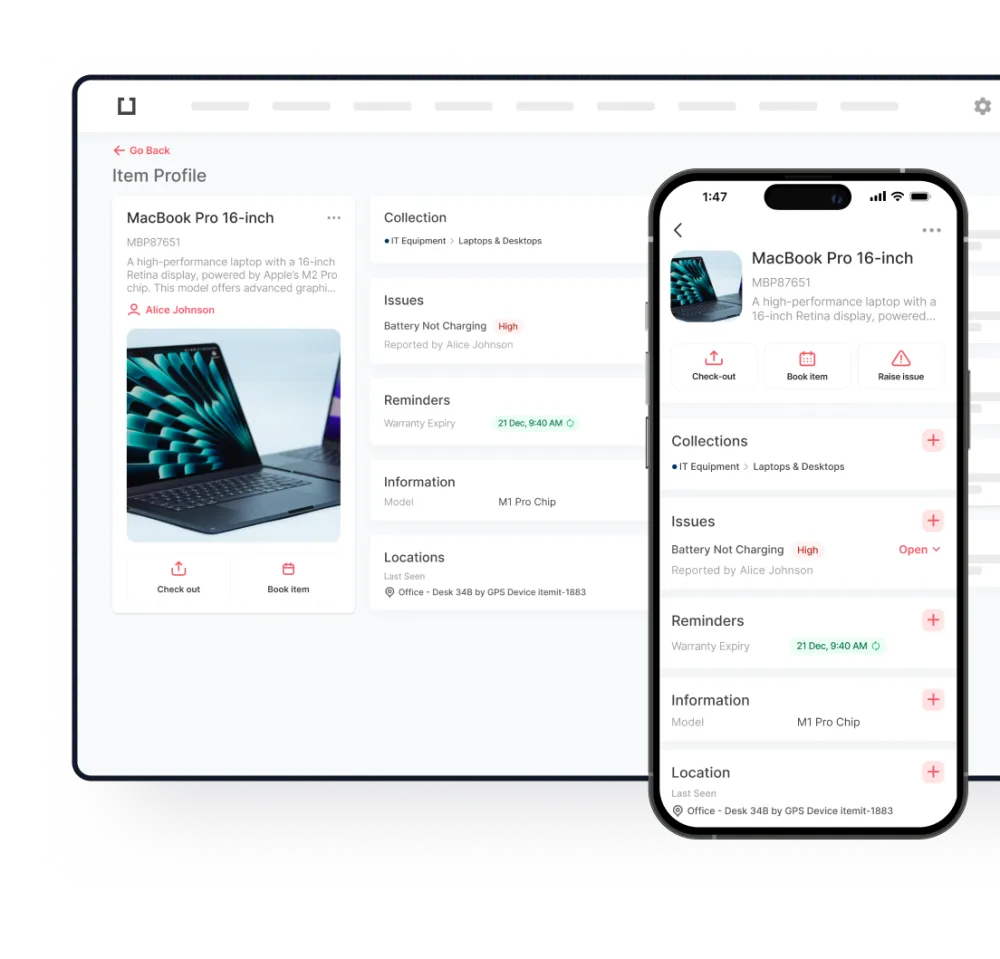
Asset tracking software works by allowing you to log individual assets as individual, digital profiles. In other words, each of your spanners will have a profile, each of your laptops and so on and so forth.
This creates simpler asset tracking operations as it makes adding critical information and data against assets easy and effective. So, if you wish to track where an asset is onsite, you'll be able to log that as a location.
This means you can also add asset information, such as make, model, and supplier, and other important details. Critically, these details can include maintenance information, simplifying equipment maintenance tracking.
Using Reminders & Issues Management
The main features you'll be using are reminders and issues management. As the core of your equipment maintenance tracking system will be focused on the uniquity of assets, these features will be customisable.
In other words, you can customise your reminders so that you can use them for IT asset management or for fixed asset management or tools and equipment tracking.
Therefore, if it's routine or pre-emptive maintenance, it can be a repeating PAT test reminder or a calibration, depending on what the asset is.
Another feature you can use is an issues management system. This is helpful for reactive maintenance. In tandem with asset tags, the issue-reporting procedure is simply scanning an asset and reporting an issue. Once this is done, the issue is logged as well as the user who reported it and the location of the asset when the asset was reported, making maintenance easy.
Critically, every time a reminder becomes due or an issue is reported, your account administrators will get an email. This means that issues and maintenance can be kept on top of and addressed quickly, reducing downtime.