
When a production line stops without warning, every minute carries a cost. Lost output, idle staff, late shipments, scrap from interrupted runs. A 2025 Censuswide survey of over 600 senior decision-makers and maintenance professionals found that unplanned downtime costs larger UK manufacturers an average of £1.36 million per hour - with total losses across the sector hitting £736 million every week.
Reducing downtime in manufacturing is one of the highest-impact moves a plant manager can make. The tactics aren't complicated, but they need discipline. This guide covers the causes, the costs, and the practices that keep machines running.
Key Takeaways
* Downtime in manufacturing falls into two camps: planned (scheduled stops for maintenance, changeovers) and unplanned (failures, breakdowns, shortages).
* Unplanned machine downtime drains an estimated 5% to 20% of productive capacity from the average plant, according to figures from Aberdeen Research.
* The leading causes are mechanical failure, ageing equipment, operator error, and missing spare parts.
* Predictive maintenance routines cut unplanned stoppages by 30% to 50% in plants that adopt them, per McKinsey research.
* A 2023 survey by RS and the Institution of Mechanical Engineers (IMechE) found UK maintenance engineers spend 19.6 hours per week on unscheduled maintenance - more than on planned work - with sector-wide annual losses exceeding £40 billion.
* Asset tracking software gives maintenance teams real-time visibility into equipment status, location, and service history.
* Tracking OEE (Overall Equipment Effectiveness) produces a single number that captures availability, performance, and quality.
What Counts as Downtime in Manufacturing
Two categories sit under the same umbrella.
Planned downtime covers scheduled work: shift changeovers, tooling swaps, preventive maintenance, equipment upgrades. It's predictable, budgeted, and built into production plans.
Unplanned downtime is the costly one. A bearing seizes. A control board fails. A material feed jams. Production stops without warning, and recovery time depends on how fast the team can diagnose, source parts, and fix the fault.
The line between the two matters because each demands a different response. Better scheduling and faster changeover techniques shrink planned stops. Unplanned stops get reduced through prediction, prevention, and rapid response.
A 2023 Siemens-commissioned study found that 69% of large manufacturers experience at least one unplanned outage per month. The financial toll is steep. Separate research by Censuswide (2025) put the average per-hour loss for larger UK manufacturers at £1.36 million, with total sector-wide losses reaching £736 million per week, and that figure only captures direct costs.
The Real Cost of Machine Downtime

Annual downtime losses to UK manufacturers alone exceed £40 billion, according to Cobaltis research. Figures vary by sector, but the pattern holds. Lost revenue from missed production. Wages paid to idle staff. Penalties for late deliveries. Expedited freight to catch up. Scrap from interrupted runs. And the slow drain of customer trust when promised dates slip.
A few benchmarks worth keeping in mind:
* Automotive sector: per-hour costs reach £1.6–2 million, contributing to a combined UK and EU annual impact of £10–12 billion (IDS-INData, 2025)
* Average UK manufacturer: 49 hours of lost production per company per year - equivalent to 3% of all working days (IDS-INData / Oneserve)
* Across all company sizes: unscheduled downtime costs a UK manufacturer an average of £5,121 per hour, ranging from under £500 per hour at smaller firms to over £10,000 per hour at larger operations (RS Industria)
* Maintenance spend: UK businesses spend an average of £120,000 per year on outsourced unscheduled repairs, with three-quarters relying on external maintenance contractors (Oneserve)
The numbers above measure direct losses. Harder to quantify is the reputational damage. A late-running plant gets fewer repeat orders, gets squeezed on price, and watches its best customers spread their supply base across multiple vendors. Recovering that ground takes years.
Reactive maintenance costs three to five times more than the same job done preventively. That gap is where the opportunity lives.
Common Causes of Unplanned Downtime
Most failures cluster around a short list of root causes. Knowing them helps focus the response.
1. Mechanical wear and tear. Bearings, belts, seals, and motors fail at predictable intervals when they aren't replaced on schedule. The MTBF (Mean Time Between Failures) figure for each component is usually known by the OEM, but many plants ignore it.
2. Lack of preventive maintenance. Skipping inspections, oil changes, calibrations. The reasoning is always the same: "We didn't have time." The result is always the same too.
3. Operator error. Wrong settings, missed checks, untrained staff running unfamiliar equipment. Industry surveys regularly link human error to roughly one in five unplanned stoppages.
4. Spare parts shortages. A £12 sensor sitting on a supplier's warehouse shelf can stop a £4 million production line for two days.
5. Ageing infrastructure. Equipment past its design life fails more, fails worse, and costs more to fix.
6. Poor visibility. Maintenance teams that don't know where equipment is, what condition it's in, or when it was last serviced spend their day chasing information when they should be fixing problems.
7. Weak shift handovers. Information lost at the shift boundary creates blind spots. A fault flagged at the end of one shift gets forgotten before the next one starts. A two-minute structured handover (verbal plus a shared digital log) closes that gap and stops small problems from growing into stoppages.
Practical Ways to Reduce Downtime

Cutting machine downtime isn't one big move. It's a stack of small ones, each closing a known gap.
Build a Preventive Maintenance Schedule That Sticks
Pull the manufacturer's recommended service intervals for every critical asset. Load them into a calendar tied to actual run hours, not just dates. Assign completion to a named person, not a department. Review compliance weekly. Plants hitting 85%+ PM compliance see unplanned stoppages drop sharply.
The discipline beats the documentation. Skipping a calibration week after week makes the schedule worthless. A leaner plan everyone follows beats a perfect plan no one does.
Add Condition Monitoring Where It Pays Back
Vibration sensors on motors. Thermal cameras on switchgear. Oil analysis on gearboxes. These tools spot the early signs of failure days or weeks before a hard stop. McKinsey research suggests predictive maintenance reduces machine downtime by 30% to 50% and extends equipment life by 20% to 40%.
You don't need to wire up every machine. Start with the most expensive failures and work down the list.
Standardise Operator Checks
A two-minute pre-shift inspection catches a surprising number of small problems before they grow. Loose fittings. Strange noises. Low fluid levels. The trick is keeping the checklist short enough that operators do it, and tying it to a system that flags missed entries.
Stock Critical Spares On Site
Run a Pareto analysis on the parts that cause the most downtime. The top 20% of part numbers usually drive 80% of the wait time. Stock those locally. Set min/max levels with auto-reorder. The carrying cost is trivial next to a stalled line. For long-lead components (custom castings, control boards, imported sub-assemblies), order one spare the day the original goes into service. The unit on the shelf costs less than waiting six weeks for a replacement when the original fails.
Track Every Asset's Location and Status
You can't maintain what you can't find. Plants running large fleets of portable equipment (welders, generators, hand tools, test gear) lose hours every week to "where is it?" hunts. Asset Tracking Software closes that gap with QR-coded tags, mobile scans, and real-time location data.
Compress Changeover Time
Planned changeovers (tooling swaps, product transitions, line resets) eat real production hours. SMED (Single Minute Exchange of Die) techniques split setup work into "internal" steps that need the line stopped and "external" steps that can run alongside production. Move as much as possible into the external bucket. Pre-stage tooling. Standardise fixture positions. Plants applying SMED principles consistently report changeover-time reductions of 50% or more, freeing capacity that was hidden in plain sight.
Run Root-Cause Analysis After Every Major Stop
Five Whys. Fishbone diagrams. The format is less important than the discipline of doing it every time and acting on the findings. A failure that repeats six months later means the fix never happened.
Track the Metrics That Drive Change
Three numbers tell most of the maintenance story. Availability shows what percentage of planned production time the line was running. MTBF (Mean Time Between Failures) tracks reliability, and a falling MTBF flags a machine sliding toward a serious problem. MTTR (Mean Time To Repair) measures how fast the team recovers once something breaks. Watch these monthly. When MTBF drops or MTTR climbs, dig in before the next outage hits.
Train, Then Train Again
Cross-train operators on adjacent machines. Train maintenance staff on new equipment before it lands on the floor. Build the training into the job, not on top of it.
Where Asset Tracking Fits Into Manufacturing Management
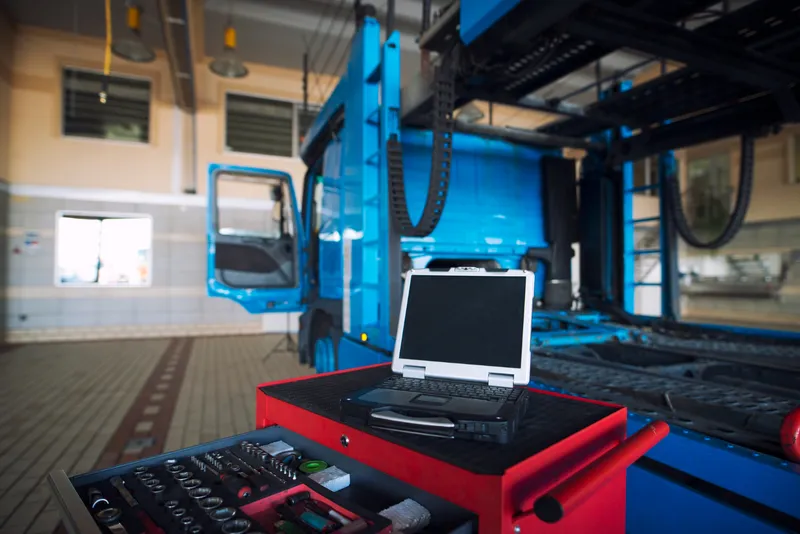
Modern manufacturing management runs on data, and most maintenance data lives in spreadsheets, paper logbooks, or nowhere at all. That's where asset tracking platforms earn their keep.
A good system gives the maintenance team:
* Live status on every piece of equipment tracking gear in the fleet
* Service history attached to each asset, viewable from a phone
* Maintenance reminders that fire automatically based on calendar dates or run hours
* Fault reporting via QR code scan, even from staff outside the main system
* Audit-ready reports for ISO, UKCA, CE marking, and customer compliance
For plants moving away from paper logs, the upgrade pays back fast. itemit, for example, lets teams Track Manufacturing Equipment across multiple sites using QR codes, RFID, and GPS tags depending on what each asset needs. Its mobile-first design means engineers update records from the floor, not after the fact at a desk.
The same data that supports maintenance also supports Manufacturing Inventory Management: spare parts levels, tool location, shared equipment bookings, and depreciation reporting all run from one record per asset.
The compounding payback matters here. Better data leads to better maintenance decisions. Better decisions lead to fewer breakdowns. Fewer breakdowns free up the maintenance team to do more preventive work, which in turn produces even fewer breakdowns. Plants that build that loop see year-on-year reductions in unplanned downtime in manufacturing even after the early wins flatten out.
Building a Manufacturing Equipment Maintenance Routine That Works
Strong manufacturing equipment maintenance routines share four traits.
They're written down. Not in someone's head. Procedures, intervals, and responsible parties are documented and accessible from the shop floor.
They're owned. One named person owns each asset's maintenance plan. When ownership is fuzzy, work falls through the cracks.
They're measured. OEE, MTBF, MTTR (Mean Time To Repair), and PM compliance are tracked monthly. What gets measured gets attention.
They're reviewed. A quarterly look at failure data shows where the plan needs adjustment. Components that fail before their PM interval need shorter cycles. Components that never fail can stretch theirs.
Routines fail when they stay static. The output of any production line changes (new products, faster speeds, different materials), and maintenance plans have to keep pace. Treat the routine as a living document, not a binder on a shelf.