No matter how large or small your business is or what you do, you are likely to have computer equipment. This equipment needs to be taken care of as it’s expensive and without trying to state the obvious, it helps you run your business. Therefore, it’s vital that you take good care of all of your IT equipment. But how can you do this? By using IT inventory software.
Let’s take a look at how IT inventory software can help and how you inventory your computer equipment, to begin with.
How To Begin
Once you have chosen the software that works best for you, it’s time to start adding everything to your inventory. This is somewhat easier than you may think. If you have used a paper inventory or even a spreadsheet, you’ll be pleased to know that software can be much simpler. There will be fewer mistakes and much more useful data collected.
One of the first things you need to do is to decide where you want to begin. If you want to start by inventorying everything in one office, that’s a good place to start. This is a much easier option than adding assets that are in multiple locations and having to move between them.
So, the first step is to attach a barcode or an RFID tag to one of your assets. As soon as you have attached a barcode or an RFID tag you simply need to scan it. A digital profile will then be created and you can add the asset to the profile.
Don’t worry, the barcodes or RFID tags that you use have been manufactured to last a long time. Just make sure you attach them in an area that’s easy to reach.
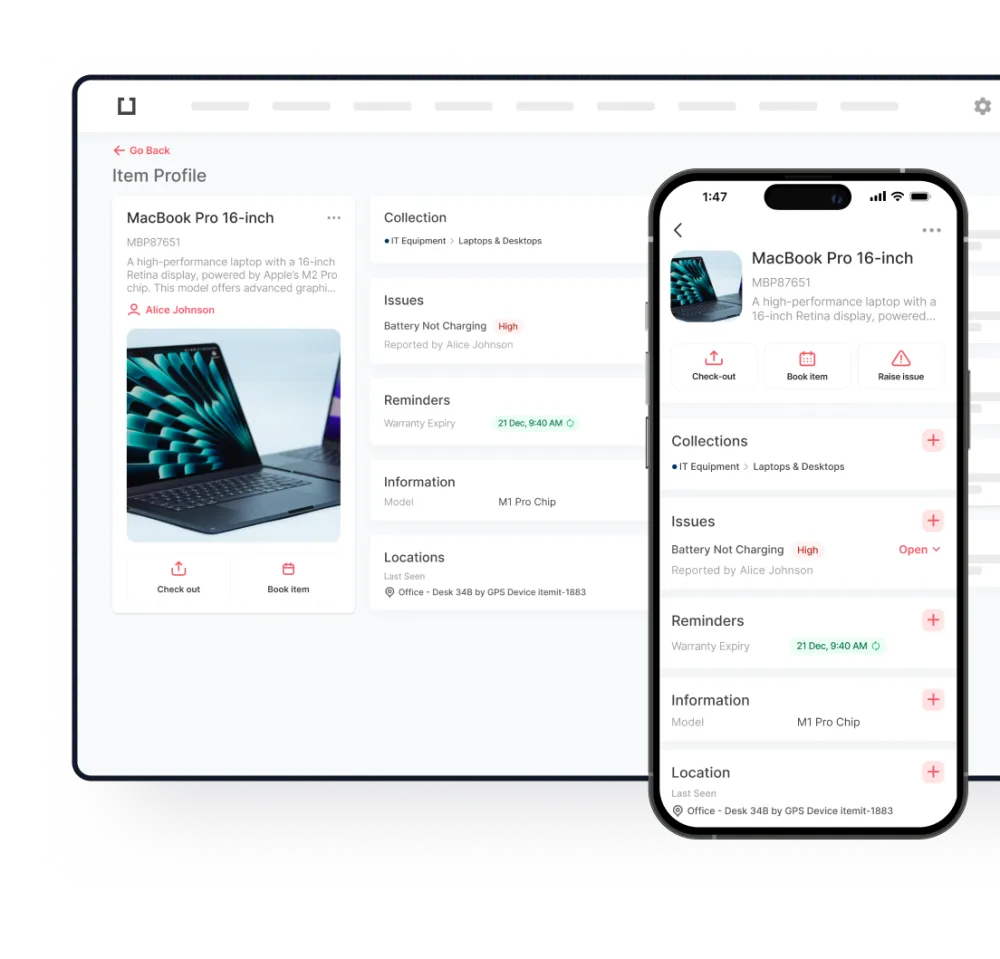
Adding Information To Each Asset’s Digital Profile
Once you have created a digital profile for an asset, it would be convenient to add some information about the asset. Alternatively, you could add such information, should you wish to.
So what information can you add to the digital profile? You can add the following:
Each asset’s:
- Make, model, and serial number
- Date of purchase and price at purchase
- Where the asset was purchased
- Warranty and insurance information
- Software licence information
- User manual or a URL that links to the manual
- Photograph for easy identification
- Maintenance schedule and history
- Warranty and insurance information
- Location
- And so much more!
The more information that you add about each computer/printer, etc., the better. You can have all of the information you’ll ever need about each asset in one place. The good news is that most IT inventory software is very reliable and easy to use.