When it comes to asset tracking, there are a lot of things you can do to automate your operations. Two of the most effective ways to automate asset tracking are GPS tracking and RFID tracking.
These two have some differences, however, and so, which is better?
While GPS gives you real-time updates, RFID allows you to track your assets hands-free.
RFID Asset Tracking
RFID asset tracking provides you with more automation than QR code asset management. RFID tags don't require a line of sight, which means that you can use RFID tags to track high-value assets.
This gives a potential edge over GPS tracking, as GPS trackers are bulky and so won't necessarily be the best option if you're tracking wine bottles or paintings, for example.
There are a few different types of RFID asset tracking, too, so you'll be able to decide what you opt into based on your budget.
Fixed RFID Reader Asset Tracking
The most automation you'll get is if you opt for fixed RFID reader asset management. With fixed RFID readers, you'll be able to track and manage which locations your assets are moving between with ease.
You'll set up fixed RFID readers in certain locations on your site and, as they'll have antennas, they'll track which direction your assets are moving in.
What this means is that if your equipment moves from one room to another, your asset management software will pick up on this and automatically log the change.
Handheld RFID Tracking
Handheld RFID asset tracking is similar but provides less automation.
You'll use BlueTooth to link a third-party RFID scanner to your asset management software and track your assets by using the reader to scan RFID tags.
Again, this is helpful when you have high-value assets, for example, as you'll be able to hide the tags in a way that you won't with GPS tags, QR codes or barcodes.
GPS Asset Management
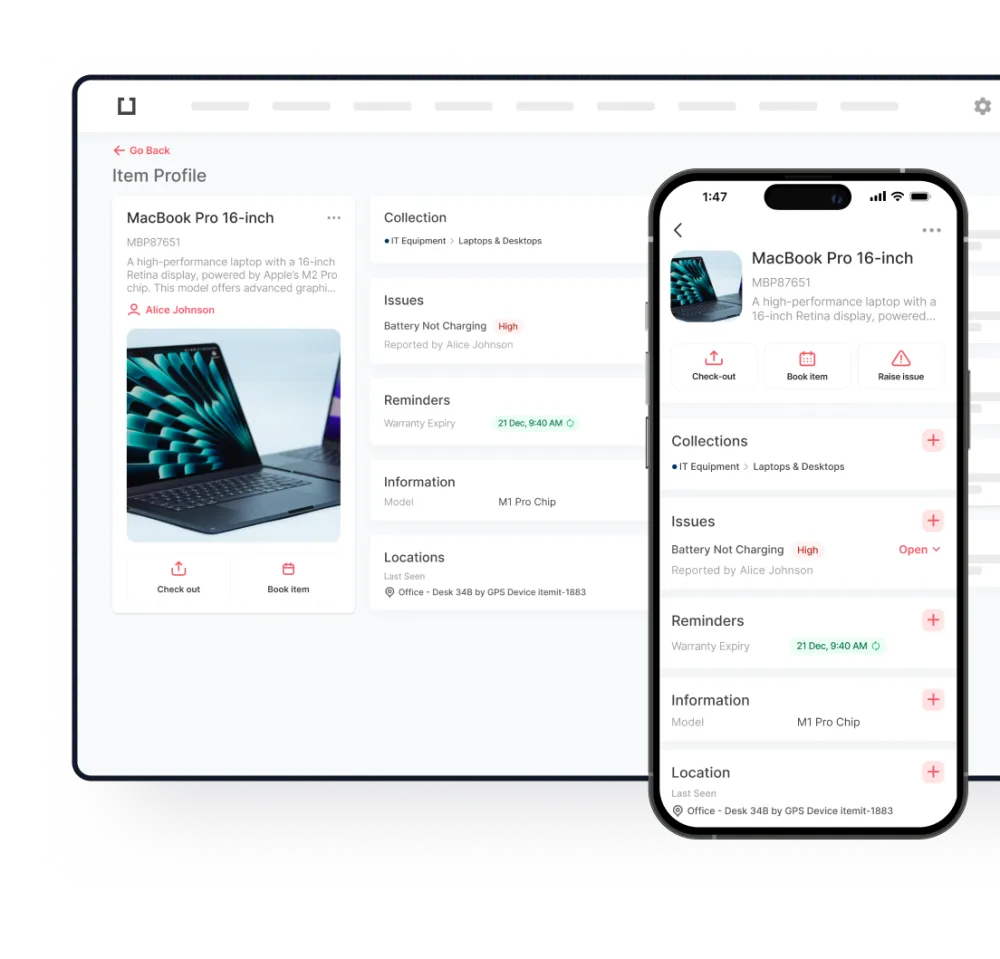
GPS provides you with different functionality than RFID asset tags. With GPS asset management, you'll be able to track the locations of assets in real-time.
However, you may want to opt for periodic updates as GPS trackers are battery-powered. What this means is that the location of your equipment will update every hour instead of every set amount of minutes.
GPS trackers are rechargeable, so if you're using GPS tracking for fleet management, you'll be able to keep the GPS trackers plugged in.
Another benefit GPS trackers have over RFID tags is that they allow for geofencing. So, fixed RFID tracking will only pick up your equipment wherever there is a fixed RFID reader. If your equipment is going offsite, the risk of theft or loss is instantly higher.
GPS can reduce risks of theft, as you'll get notified when a GPS tag leaves the location it's supposed to be in.