RFID, or Radio Frequency Identification, is a powerful technology. Using an RFID inventory system paves the way for total control and visibility over where your assets are within a room on a floor, an area in a manufacturing facility, or even a particular location on an open building site. It provides automation, which means that you no longer need to manually update any of your asset locations or even stock-check your assets regularly. This is where an RFID inventory system becomes invaluable, reducing time and effort for businesses.
Here, you will be able to find out more about how RFID inventory systems work and, therefore, how they will save your business time and money. The technology is relatively new, having been around for only about 20 years. However, it has already created a powerful level of automation one could only imagine a few years ago.
An Introduction To RFID Asset Tracking
Asset tracking has come a long way in the past decade. Many companies are still using the old ways of spreadsheet asset tracking to manage fixed assets, tools, equipment, and IT assets.
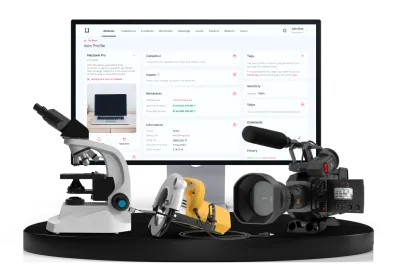
Asset tracking has come a long way in the past decade. Many companies are still using the old ways of spreadsheet asset tracking to manage fixed assets, tools, equipment, and IT assets. Spreadsheet asset tracking has always had gaps, but it was only recently that these gaps could be minimised through the use of smartphones, apps, and cloud-based software. Now, you can use RFID inventory management to log all of your assets. These assets can have unique profiles, meaning you can add unique data, such as issues and maintenance information, to your assets.
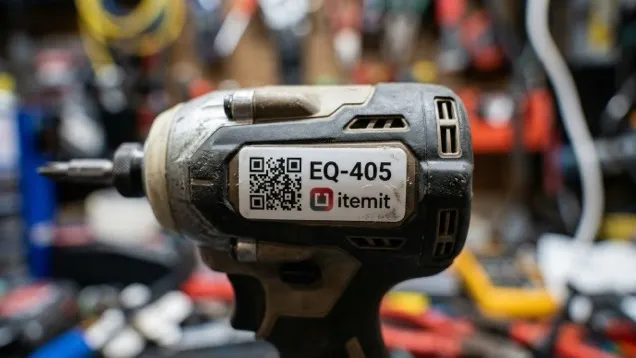
This is where RFID comes in. When you’re using an asset-tracking app, you can use asset tags to speed up asset discovery and audits. Most commonly, these tags will be barcodes and QR codes that are scannable with your phone’s camera. Then, when you scan one of these tags, the asset profile of the equipment it’s attached to will open on your app, and the last seen location will update. This integration highlights the benefits of a comprehensive RFID inventory system for asset management.
Overview of Types of Auto-ID Technology
Auto-ID technology refers to a group of technologies you can use to create digital twins of assets. In other words, you will be able to stick a barcode onto an asset and use this barcode to discover your asset within your asset tracking software.
As your assets are unique, Auto-ID technology must be unique, too, as each barcode, QR code or RFID tag will be used to find a specific asset within your system.
Here is a comparison chart of some of the Auto-ID technologies that are available:

RFID Asset Tags
RFID tags are effectively a supercharged version of barcodes. These super-tag labels are made up of an RFID chip adhered to an antenna to interact with RFID hardware.
Unlike barcodes, such methods of detection using radio frequencies do not require visual line-of-sight. Furthermore, an RFID inventory system is capable of reading thousands of RFID tags within a few seconds, providing a powerful new process to instantly detect the presence of large volumes of assets without the need to manually scan them one by one.
Active RFID Tags
Active RFID tags use batteries, meaning that they have a longer read range. This is because active RFID tags continuously send out a radio frequency for an RFID reader to detect, thus increasing the overall read range, much like a phone. The combination of RFID hardware, like the reader and tag, is critical when making a decision, as these are the two devices communicating with each other.
The combination of reader and tag is critical when it comes to a decision, as ultimately, these will be the two devices communicating with each other. You need to ensure that the read ranges of your RFID reader and your tags are larger than the gap between reader and asset while also taking into account that the highest read ranges will generally have the highest costs.
However, businesses need to be aware of the RFID inventory system cost when considering active tags, as larger batteries and more complex infrastructure can increase expenses. But bigger isn’t always better, as you can’t track small tools with large RFID tags, and bigger tags can be more expensive.
Active RFID tags, therefore, work within specific operations and the size of these tags can be a limiting factor in how well they work for you. Passive RFID tags have much more customizability when it comes to your operations and don’t require battery replacements.
Passive Long-Range RFID Tags
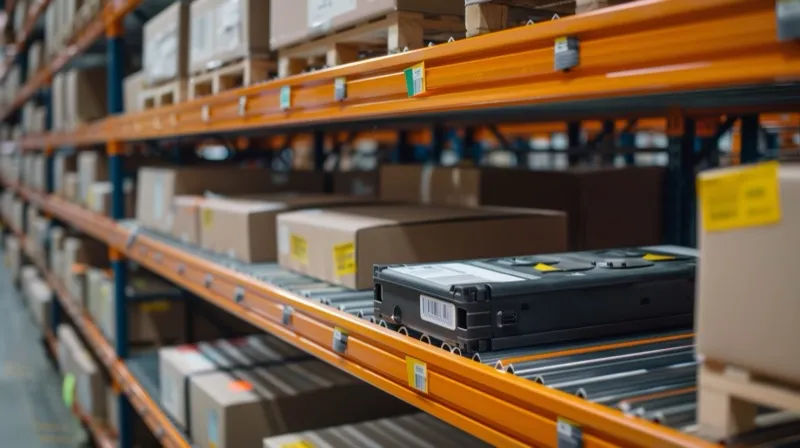
Passive RFID tags do not require batteries but have a lower read range. Whilst active tags communicate by sending out their own signal, greatly increasing the overall read range, passive tags only receive a signal, meaning that their read range is typically 3-5 metres using normal RFID readers but some up to 20 metres for long-range RFID readers.
The most common passive RFID tag for long-range detection uses Ultra High Frequency (UHF) tags, suitable for RFID systems for manufacturing environments. These tags are powered by the radio frequency emitted by the fixed RFID reader, ensuring efficient asset tracking. Passive tags are ideal for more confined environments like a shop floor, lab, or office, and they are often considered among the best RFID solutions for cost-effective asset management.
These EPC Gen2 tags do not require manual intervention after they’ve been stuck onto an asset and they can last about 20 years. They are also cheaper than active RFID tags with typically a much smaller form factor (some as small as a few specks of sand!).
Generally, this means that they’re more suitable for tracking smaller assets and more suitable when used in a more confined environment, such as a shop floor, lab, or office.
However, the reduced need to interact with these tags also means they’re more suitable for hazardous environments, so there is a lot to consider when it comes to choosing the best tags for your use case.
Both types of tags can be customised to your needs, and it’s important to note that certain tags interact with certain materials. Many passive RFID tags, for example, will not work on conductive materials such as metal, so this is another thing to consider in your search for RFID solutions.
For passive RFID tags there are three ways in which these passive tags can be read:
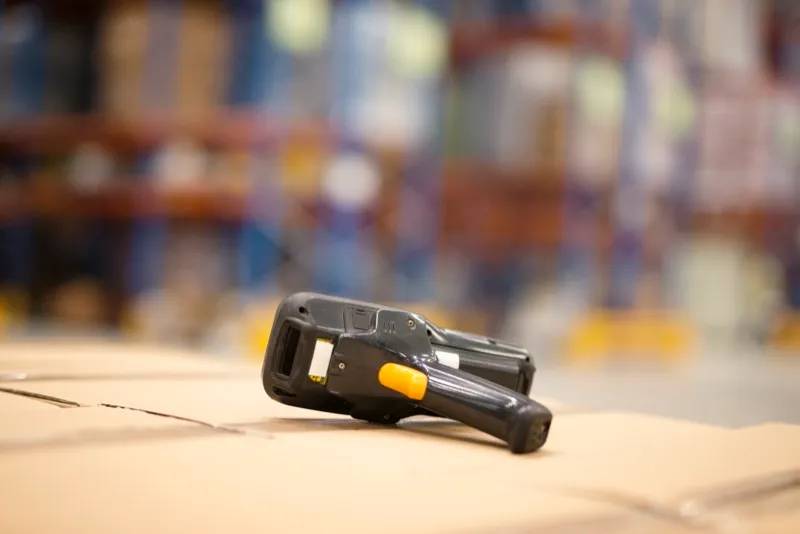
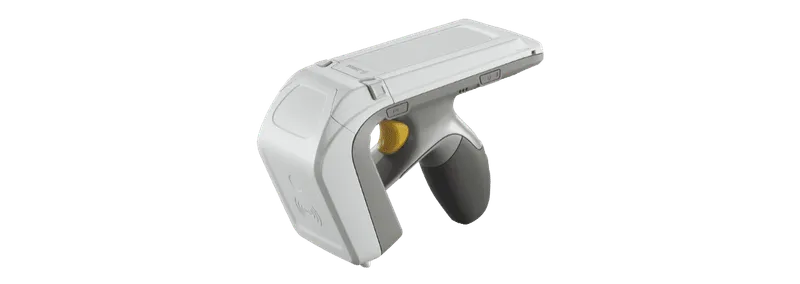
1. Using RFID handheld devices capable of detecting tags within 5 metres range
Setup:
An RFID handheld reader is required
Typical installation & Cost:
Up and running in minutes. Cost for one reader, you’re looking at around £1000
Capability:
a. Has mobility and can deduce location based on location tags or GPS of the smartphone
b. The cheapest option with the highest flexibility
c. Better than barcode because can read hundreds of assets within seconds
Challenges:
But has similar limitations in that you need a user to bring the device near the tagged object to scan them
Others:
Great for stock check and check-in/check-out processes
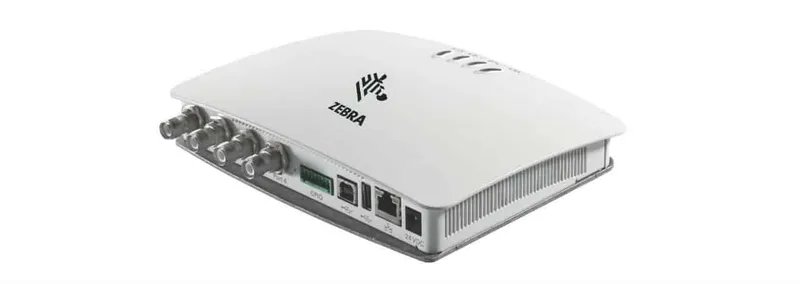
2. Using Fixed RFID readers typically connected with 1 or more antennas capable of detecting tagged assets within 10 metres area
Setup:
a fixed reader with 1 or more antennas, typically 4
Typical installation & Cost:
Up and running within 1 day given networking availability. Cost around £2500 per reader set
Capability:
a. Great for hands-free operation for any time tagged assets/equipment go past a particular zone location
b. One can also have multiple antennas multiplexed to reader
c. With itemit, you do not require any onsite middleware or servers
d. Readers only require power in, you can use wifi to simplify network deployment
Challenges:
a. Once fixed to the ceiling or wall, they can’t be removed that easily unlike handheld
b. For really high-density tagged assets, 100% readability may not be achievable but not impossible. Realistically you’re looking at 90% to 99% (whoever promises you 100% in all circumstances will be lying!)
c. Does not provide you with precise location within sub-metre, and only a zone location accuracy
d. Require large number of antennas and RFID readers to read a large area e.g. warehouse
3. Using Real-Time-Location System (RTLS) RFID Readers that is capable of providing an pinpoint x, y and z location within a metre
Setup:
Phased Array RTLS, only one reader (with in built antenna) required to cover a wide area
Typical installation & Cost:
Up to about £9,000 per reader, but the cost per metre will be much lower than 2 above. Installation will take say 2-3 days for each reader
Capability:
a. New cutting edge technology that’s available only in the past year that we believe will revolutionise large scale RFID tracking with the lowest cost of infrastructure
b. Provides true x, y, z location accuracy up to sub-metre accuracy
c. Great for open space (like open warehouse/factory) as it can be mounted high up in the ceiling that’s 20-30 metres high
d. Provide real-time movement of an asset sub-metre that can be mapped as a trail…
Challenges:
Not suitable for an area with low ceiling as this will increase cost per sq metre