GPS trackers can help you keep an eye on your tools and equipment. Your assets are most likely to go missing when they're in motion. If your equipment is moving between two construction sites, for example, they are more likely to go missing while in transit.
Usually, asset tracking is limited to onsite audits and edits when you have the assets to hand, but thanks to an expansion of many features and thanks to GPS trackers, it is now possible to track your tools and equipment when they leave your sites.
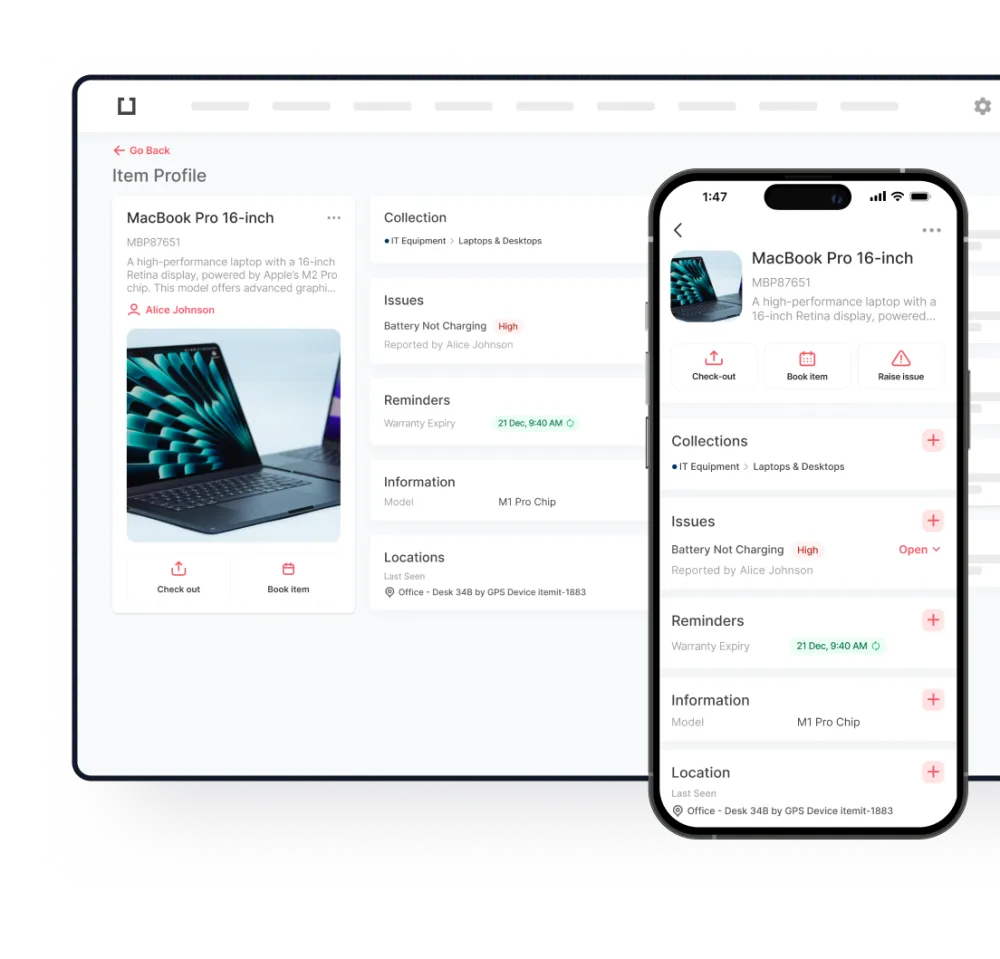
Thanks to GPS trackers, you'll be able to view where your assets are and how they're behaving remotely, therefore auditing from a distance.
The Benefits Of GPS Trackers
GPS trackers allow you to audit and monitor your assets from a distance. As they provide your asset management system with feedback, you don't need to scan or interact with your tools and equipment manually.
What this means is that you can verify an asset's location from a distance, as well as leverage more handy features to mitigate asset theft and asset loss.
Theft on construction sites is a huge problem, too, so you'll also be able to use geofencing features to ensure that your assets are in the correct location. This means that if someone tries to steal an asset, you'll get an alert in your asset management system.
How Do GPS Trackers Work?
GPS trackers use SIMs to collect location data. They can then be configured to update at certain intervals. This means that every hour, for example, a GPS tracker will ping its location using the SIM.
This allows for geofencing features, as the GPS tracker will know when it leaves a certain radius. Then, your asset tracking system will handle the rest, notifying you of what's happening.
GPS trackers also have tamper proof backs, meaning that if anyone tries to remove your GPS tracker from your equipment, you can also get notified of this.