IT asset management software can benefit businesses, both large and small. These benefits overlap, but there are some specific areas where IT asset management software can help your growing business.
So, how can IT asset management help your small business?
One: You Can Diversify your IT Assets
Not everyone will need to have the same IT assets, and you'll be able to cut costs this way.
For example, you'll probably have a technical team and a client-facing team. Whether most of your business occurs on a website, there'll still be developers well versed in HTML, Javascript and CSS Stylesheets.
The other team will be creating content, talking to clients, creating campaigns online and using their laptop or desktop in a very, very different way.
Therefore, there is little point using the same hardware for everyone. Hardware asset management will show you how your IT hardware assets are used, and so you can cut costs by diversifying the hardware you're purchasing.
Instead of giving everyone the latest model with 16GB RAM, you can use your IT asset management software to see how assets are actually used and pick and choose what each of your employees needs.
In this vein, if you're providing phones for your employees, there's little point that developers have a business phone. Being able to track contracts and who has a phone means that you can predict your finances much better.
Two: Fewer IT Assets are Needed
Yes, everyone will still need to have their own laptop. Any cost that can be cut should be, though, when you're working towards a fully-scaled business.
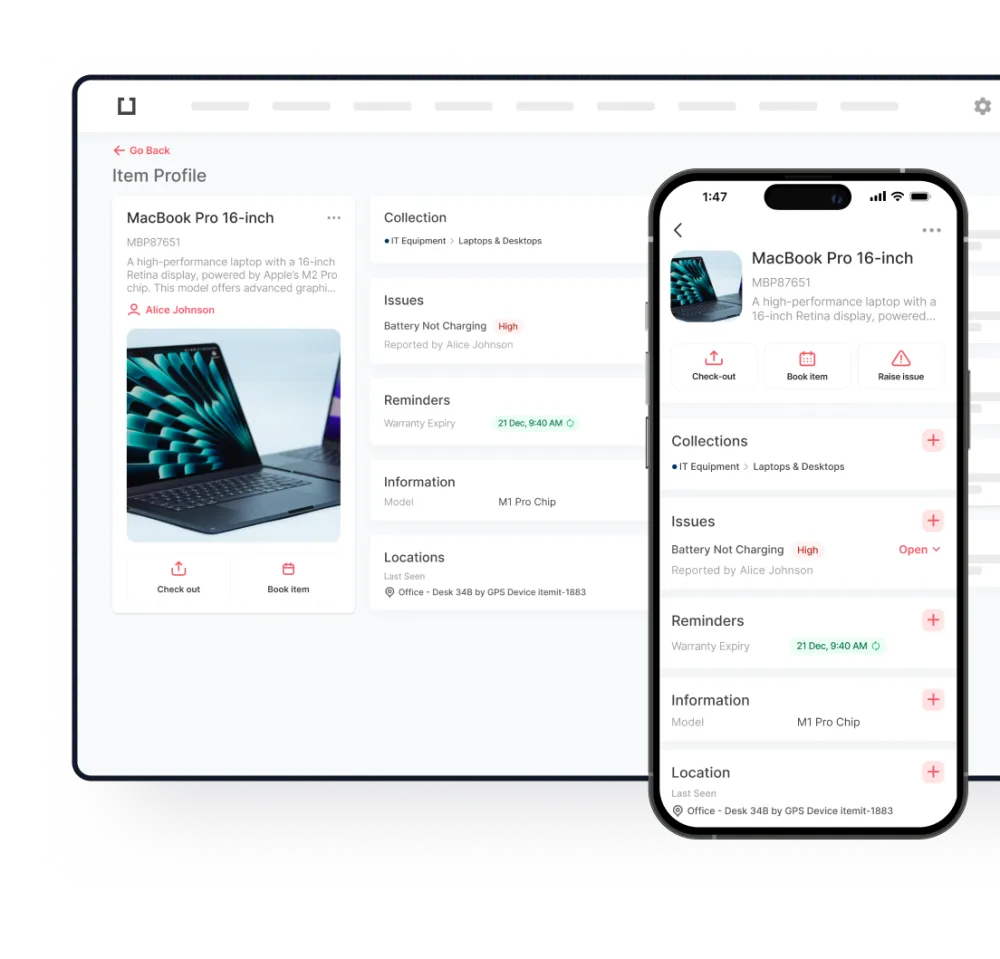
Being able to log, book, and monitor your IT assets, means that non-crucial costs can be curbed.
It would be nice if everyone had an iPad to test how an app works or what the website looks like, but it simply isn't necessary.
The problem without IT asset management software is that these shared IT assets quickly become unaccounted for. How many times have you searched a while before giving up and asking the entire office where x y z has gone, before discovering that nobody knows?
Tracking your shared IT assets means that you won't purchase unnecessary duplicates in an attempt to replace "lost" assets. It also means that you can see the bare minimum amount you need.
Being able to track IT asset use is also helpful. If nobody uses an IT asset, the transparency will prevent a purchase of another asset that nobody is going to use. If everybody is using an asset day-to-day, in terms of productivity, it may be more economical to purchase another one.