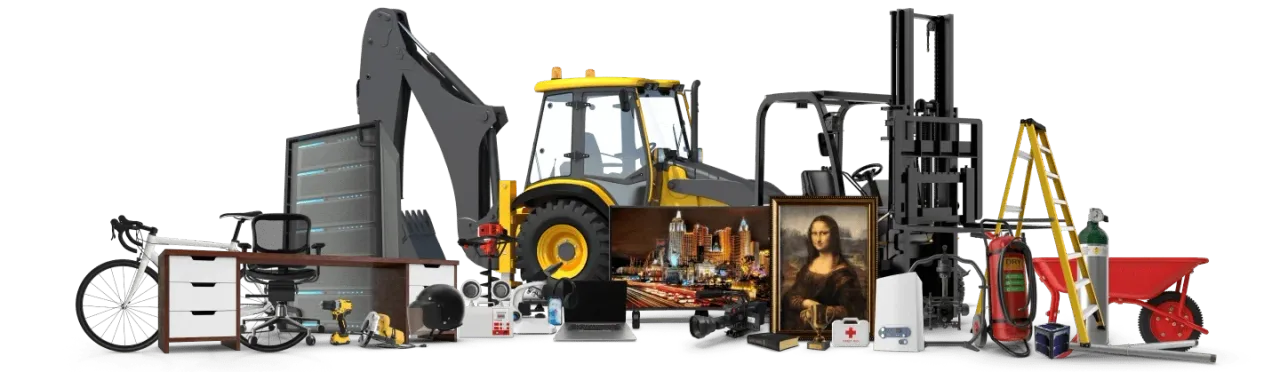
When you invest in high value assets you want the peace of mind of knowing where they are and how they are behaving. RFID technology does just that, offering a smarter and more discrete solution than other asset tracking solutions that helps you protect your most valuable investments. Whether it’s expensive artwork, construction equipment or critical medical devices, you can track them all using RFID. With a centralised system you can log, account for and track a diverse and varied portfolio of assets all in one place. Anything from great art to fine wine can be categorised, managed, and located, along with a secure record of insurance details, valuations and the location of your unique collection.
What Is RFID Asset Tracking?
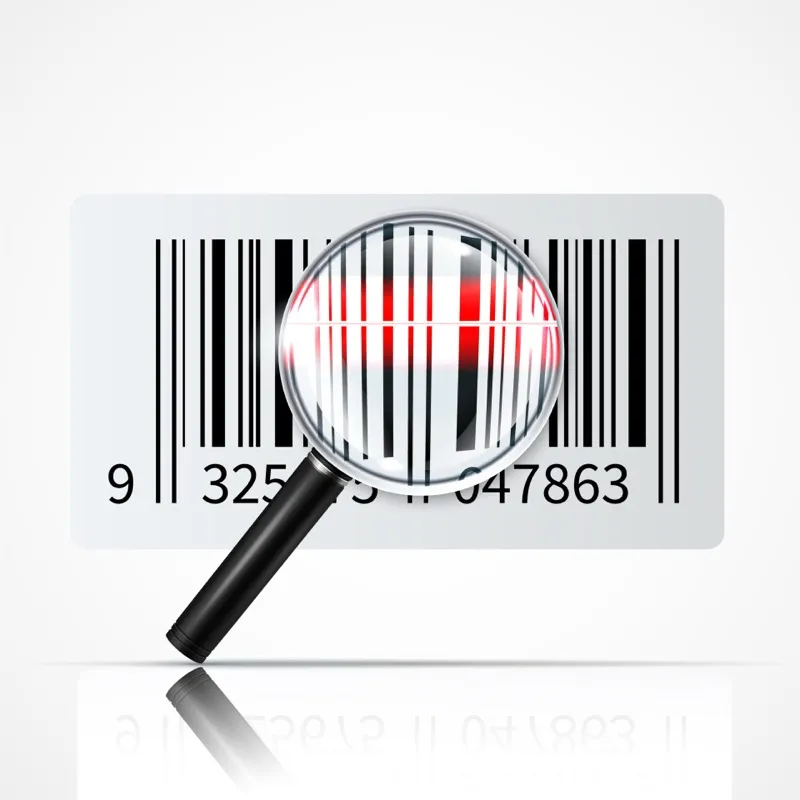
RFID stands for Radio Frequency Identification and works by using radio frequencies to broadcast the location of the tagged asset. RFID asset tracking is similar to using barcodes or QR codes to monitor the movement of assets but with RFID you can unlock greater levels of automation, transparency, and control with less conspicuous tags. Whether you work at a construction company, fine art auctions, or the healthcare industry, RFID asset tracking can transform your operations, saving you time and money.
 Watch video
How Does RFID Asset Tracking Work?
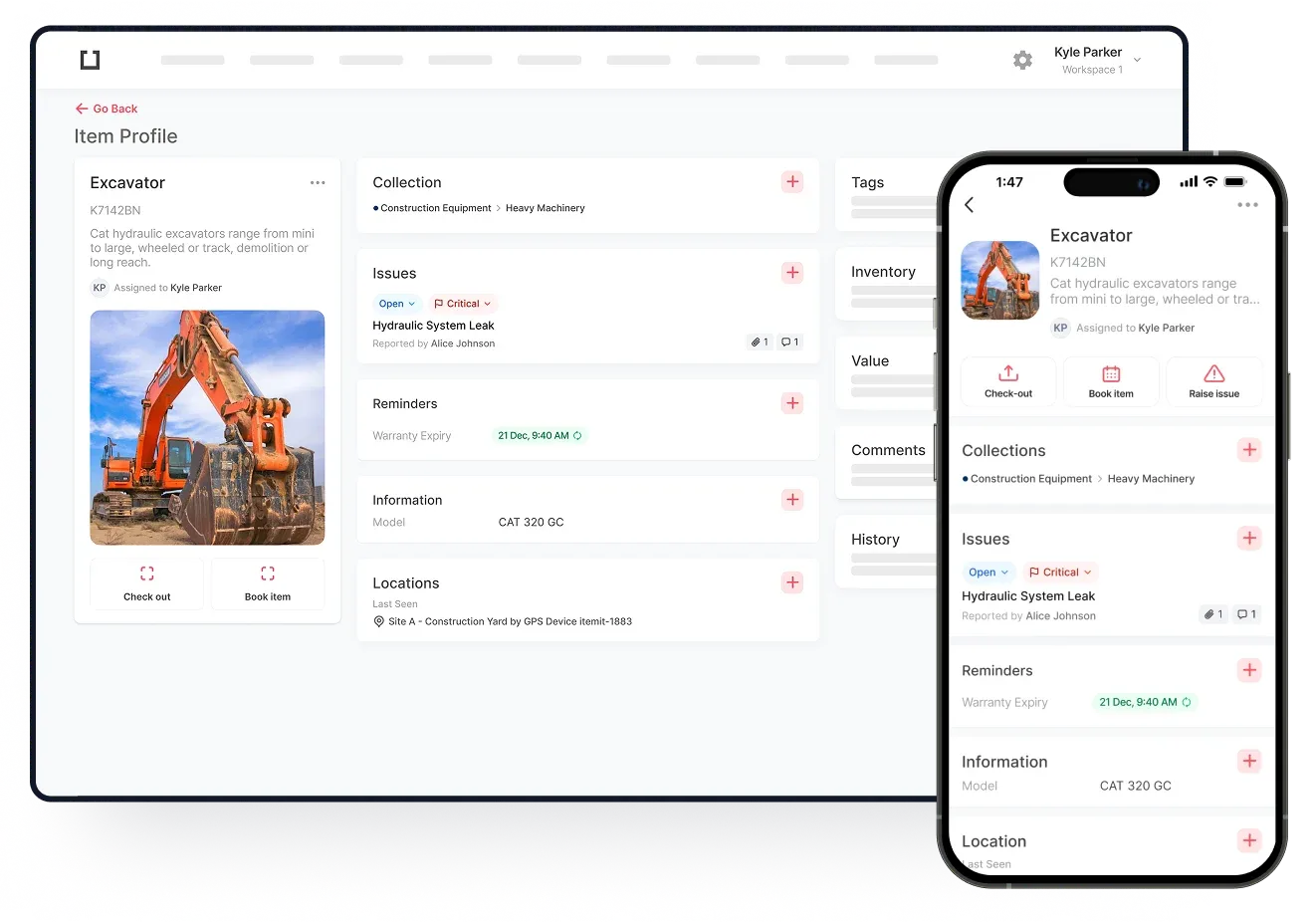
RFID asset tracking is essentially the linking of real-life assets to online profiles. To do this, data about the asset is contained within an RFID tag and physically attached to the asset. The asset data is stored in an online asset management system resulting in a register of uniquely tagged assets. You can interact with the online asset register and add crucial information such as maintenance plans, personnel information or asset location. Unlike barcodes and QR codes, RFID asset tracking doesn’t require a line of sight for scanning. With RFID asset tracking, your device (either a fixed or handheld reader) picks up the RFID tag. This greatly speeds up auditing assets as the only thing you need to do is pull the trigger on the RFID reader. The same is true for when you’re adding multiple assets to a new location, as itemit’s Quick Add feature speeds this process along. Keeping track of your assets has never been simpler.
How to Track High Value Assets with itemit
Track your high value assets with itemit. Our RFID technology enables you to simply tag and scan items, and photograph them for instant recognition within an asset register. RFID asset tracking allows you to make sure you know where your asset is every step of the way, from checking in to checking out and everything in between. How to track an asset with RFID technology can be broken down into three steps:
- Attach a tag to the asset.
- Scan the tag with an RFID reader.
- View the asset’s records and automatically update its location in the database.
Every time you pick up an RFID handheld reader you can locate assets tagged within its range, whilst an RFID fixed reader will pick up each time an RFID tag passes it, making it super easy to follow a trail of where your assets were last seen.
The retrieval of asset profiles is sped up this way, too, meaning that you don't need to log changes manually on a spreadsheet later on down the line. Instead, you can update a fixed asset register while you're physically with assets simply by using a cloud-based app.
Which Type of RFID Tag Should I Use?
Passive Tags
The various types of RFID tags offer a solution for any application. Passive tags rely on the tag reader for power and, as a result, have a transmission range of a few metres. As they don’t have an internal battery, passive tags are small in size and typically last around 20 years, resulting in a lower tag cost. Their small size also means they are able to fit into almost any package or product, making this type of tag a great choice for tracking inventory, supply chain management, and access control.
Active Tags
Active tags are typically larger in size than passive tags but usually no bigger than a smartphone. This type of tag incorporates a transmitter with a battery in a single unit. They have significant data memory and can transmit up to 2000 metres continuously or when activated by a reader’s radio signal. Their ability to cover great distances make them popular in the construction, mining, oil and gas industries. Active tags can also include environmental sensors that collect data on temperature, moisture and other metrics to help protect high-value and sensitive assets.
The most significant difference between active and passive RFID tags is that an active tag has a battery and a passive tag does not. Although an active tag can communicate at a much longer range, a passive RFID tag is often still the preferred choice as it is significantly cheaper at the point of sale as well as longer term since passive tags do not require battery replacements. In most use cases, having a shorter read range is an advantage as you can be confident that the tagged item is right in front of you or the reader.