Book a demo and get 10% off your first plan

Types of inventory: A Complete Guide

By Dr. Alex Wong
Published on April 8, 202611 min read
Back to Blog

Understanding inventory management can feel overwhelming for many business owners. From the moment physical goods enter a warehouse to the point they finally reach a customer, businesses must track various categories meticulously. Knowing precisely how each category functions is essential for maintaining smooth operations, controlling overall costs, and meeting customer demand efficiently at all times.

In this comprehensive guide, we will explore the core concepts of stock tracking, break down the various classifications, and provide actionable advice to optimise your entire supply chain. We will also introduce how intelligent software solutions like itemit make managing these physical assets much simpler. By the end of this detailed article, you will have a clear strategy for taking full control of every single asset within your growing organisation.

What Is Types of inventory?

When business leaders and logistics managers ask, "What is types of inventory?", they are usually trying to understand the different classifications of goods a modern company holds for active production or eventual resale. Inventory is perfectly defined as a dynamic cycle of materials, components, and finished products moving through different stages of operational readiness. It is not simply a monolithic group of items sitting aimlessly in a dusty stockroom.

Categorising these valuable assets allows growing companies to calculate their true financial value, allocate physical storage space appropriately, and ensure active production lines never halt due to missing integral parts. Whether you currently run a small local retail shop or manage a massive international manufacturing plant, properly identifying your held goods is the crucial first step toward significantly reducing waste and unlocking tied up financial capital. This foundational knowledge empowers warehouse staff and executive teams alike to make highly informed purchasing decisions, rather than relying on guesswork that often leads to costly overstocking.

Furthermore, standardising your classification methods creates a universal language across all participating departments. Procurement, sales, and accounting teams can operate in complete alignment when everyone understands precisely what is currently held in stock and what stage of the lifecycle it occupies.

The 4 Types of Inventory

Inventory generally falls into four distinct categories. Understanding the profound differences between these vital groups allows businesses to streamline their complex accounting processes and improve overall daily operational efficiency. We will dive deep into each specific category to explain exactly how it functions within the wider supply chain ecosystem.

1. Raw Materials

Raw materials are the basic, unprocessed items used to manufacture tangible goods. For a commercial bakery, this would naturally include bulk flour, granulated sugar, and fresh eggs. For a major electronics manufacturer, raw materials might consist of delicate silicon wafers, extensive copper wiring, and various plastic casings. Without a steady, reliable supply of high quality raw materials, production essentially stands completely still. Tracking these essential items accurately prevents disastrous supply chain bottlenecks and ensures your manufacturing team never has to wait for delayed deliveries.

Supplier relationships are vital when dealing with raw materials. Businesses must forecast demand strictly to ensure they order the correct quantities. Ordering too much leads to potential spoilage, while ordering too little leads to lost manufacturing time.

2. Work-In-Progress (WIP)

Work-In-Progress, affectionately referred to as WIP by industry professionals, refers to materials currently in the active production phase but not yet entirely ready for final sale. These are the items physically sitting on the busy assembly line. Because expensive labour and significant overhead costs have already been firmly applied to these materials, WIP stock represents deeply tied up cash. Minimising the time items spend in the WIP stage is a common, highly sought after goal for lean manufacturing operations globally.

Monitoring WIP levels highlights inefficiencies in your production flow. If assemblies take too long, it indicates a distinct need for better equipment or additional staff training.

3. Finished Goods

Finished goods are completed products fully ready to be sold directly to customers. These specific items have passed rigorous quality control inspections and are efficiently stored on warehouse shelves awaiting immediate shipment or public retail display. Excess finished goods stock can unfortunately lead to severe storage space problems and potential product obsolescence, while holding too little stock can result in missed lucrative sales opportunities.

Optimising finished goods relies heavily on accurate market forecasting. Sales teams must work closely with inventory managers to predict seasonal demand spikes, ensuring there is enough product to satisfy eager buyers.

4. Maintenance, Repair, and Operations (MRO)

MRO inventory includes all the sundry supplies strictly necessary to keep a business running smoothly, even though these particular items do not end up inside the final product. Reliable tools, industrial cleaning supplies, basic office stationary, and essential replacement parts for heavy machinery all comfortably fall under the expansive MRO category. For many major industries, managing MRO supplies efficiently is literally just as critical as tracking primary raw materials.

When a crucial conveyor belt suddenly breaks down, having the right MRO replacement part securely stored nearby means the difference between a ten minute delay and a catastrophic full day shutdown.

Types of Inventory Comparison Table

To make identifying and evaluating these major categories noticeably easier, we have painstakingly created a helpful comparison table highlighting the incredibly unique characteristics of each specific type.

Inventory Type Clear Definition Example (Manufacturing Sector) Example (Retail and Office Space)
Raw Materials Unprocessed core basic components Sheets of steel, raw plastic pellets, untreated wood Not applicable (Retailers usually buy finished items)
WIP (Work-In-Progress) Items currently trapped in active production Partially assembled modern electric cars Bespoke clothing alterations currently in progress
Finished Goods Fully completed items completely ready for public sale Fully tested and boxed smart mobile phones Designer clothing beautifully displayed on retail racks
MRO Supplies Valuable items used exclusively to keep the business physically running Industrial machine lubricants, mandatory safety gear Office printer ink, dedicated professional cleaning supplies

Key Takeaways

Successfully navigating these complex categorisations requires ongoing diligence. Here are the most vital core principles to remember for continued ongoing success:

  • Categorisation is absolutely crucial: Correctly classifying all physical goods ensures completely accurate financial reporting and strict regional tax compliance.
  • Balance is literally everything: Holding substantially too much stock tightly ties up usable capital, while conversely holding far too little risks catastrophically stalling active production.
  • MRO matters significantly: Do not ever neglect your essential maintenance supplies, as unexpected machinery breakdowns can instantly halt your entire operation.
  • Modern technology is the genuine answer: Manual paper spreadsheets are highly prone to human error. Upgrading to a digital asset tracking system directly provides total real time visibility continuously across all operational categories.

Ready to take control of your assets?

Join thousands of businesses managing their raw materials, WIP, and MRO with ease.

Secure Your Free Demo Today

Benefits of Types of inventory

Understanding the profound benefits of rigorously classifying different types of inventory goes far beyond simple physical warehouse organisation. When a proactive business implements a dedicated, highly structured approach to overall asset management, the entire organisation reaps numerous measurable financial rewards.

Firstly, proper accurate classification drastically improves daily cash flow. By always knowing exactly how much raw material versus finished commercial stock you actually have, purchasing procurement teams deliberately avoid costly over ordering. This magically precise knowledge immediately frees up valuable financial capital that can instead be intelligently invested back into long term business growth rather than sitting idle taking up space in a massive dusty warehouse.

Secondly, strict categorisation significantly enhances overall customer satisfaction levels. When all finished goods are accurately tracked digitally, your frontline sales teams can confidently provide highly reliable delivery expectations to discerning buyers. Order fulfillment simultaneously becomes remarkably faster, and the terrifying risk of mistakenly taking guaranteed orders for completely out of stock items plummets close to zero. Satisfied customers are extremely likely to become loyal repeat buyers, fueling sustainable revenue growth.

Finally, a highly structured and disciplined inventory approach makes mandatory annual financial audits significantly easier for your accounting team. Professional accountants absolutely require crystal clear visibility into raw materials valuation, WIP status, and finished goods counts to correctly determine the total cost of goods sold. When these exact categories are well defined and constantly tracked meticulously, comprehensive financial reporting happily becomes a relatively straightforward internal task rather than a highly stressful, incredibly time consuming ordeal.

How to Get Started

Transitioning from a chaotic and messy stockroom to a beautifully orchestrated modern warehouse requires a very systematic approach. Follow these helpful actionable steps to successfully get started on your transformation journey:

Step 1: Conduct a Comprehensive Facility Audit

Begin forcefully by manually physically counting every single loose item hiding in your entire facility. This rigorous process strictly includes the random items secretly hidden in personal desk drawers and the vital spare parts kept quietly near the heavy machinery. You quite simply cannot manage what you do not even know you currently have.

Step 2: Assign Clear Master Categories

Carefully review the massive audit results and deliberately assign absolutely every found item to one of the fundamental four main categories: Raw Materials, WIP, Finished Goods, or MRO. Be exceptionally thorough during this critical classification phase.

Step 3: Implement Professional Quality Labelling

Once items are perfectly categorised, firmly deploy a reliable physical labelling system. Using robust asset tags, such as scannable QR codes or durable barcodes, links physical offline items to deeply comprehensive digital records almost instantly.

Step 4: Adopt a Powerful Digital Solution

Completely abandon outdated manual Excel spreadsheets forever. Intelligently invest in a dedicated, highly secure cloud based asset tracking software system that effortlessly allows your entire workforce team to comfortably scan items and instantly update stock levels in total real time from absolutely anywhere.

Frequently Asked Questions

Is product packaging correctly considered a raw material or MRO?

Final packaging is almost universally considered a primary raw material because it directly physically accompanies the finished commercial good straight to the end consumer. However, basic shipping supplies strictly used internally to move things around safely might instead be rightly classified officially as MRO.

Exactly how often should a proactive business strictly audit its precise WIP inventory?

The optimal audit frequency truthfully depends entirely on your specific unique production cycle length. Extremely fast moving modern manufacturing lines might desperately require daily or even weekly WIP counting checks, whereas incredibly slow bespoke master craftsmanship might adequately only require straightforward monthly audits.

Why is tracking assorted MRO items historically so incredibly difficult?

MRO items are very often extremely inexpensive and regularly freely accessed by numerous different employees consistently across a multitude of different disconnected departments without proper oversight. Without implementing a very strict mandatory checkout procedure or deploying dedicated tracking software, these little items easily rapidly go totally missing or are improperly hoarded locally.

How itemit Helps With Types of inventory

Attempting to manage multiple drastically different categories of corporate stock definitely does not actually have to physically be a terrifying daily headache. This exact scenario is precisely where itemit successfully steps in. As an award-winning industry leading asset tracking and powerful equipment management software solution, we happily provide all the robust tools completely required to successfully bring calm order to your confusing supply chain processes.

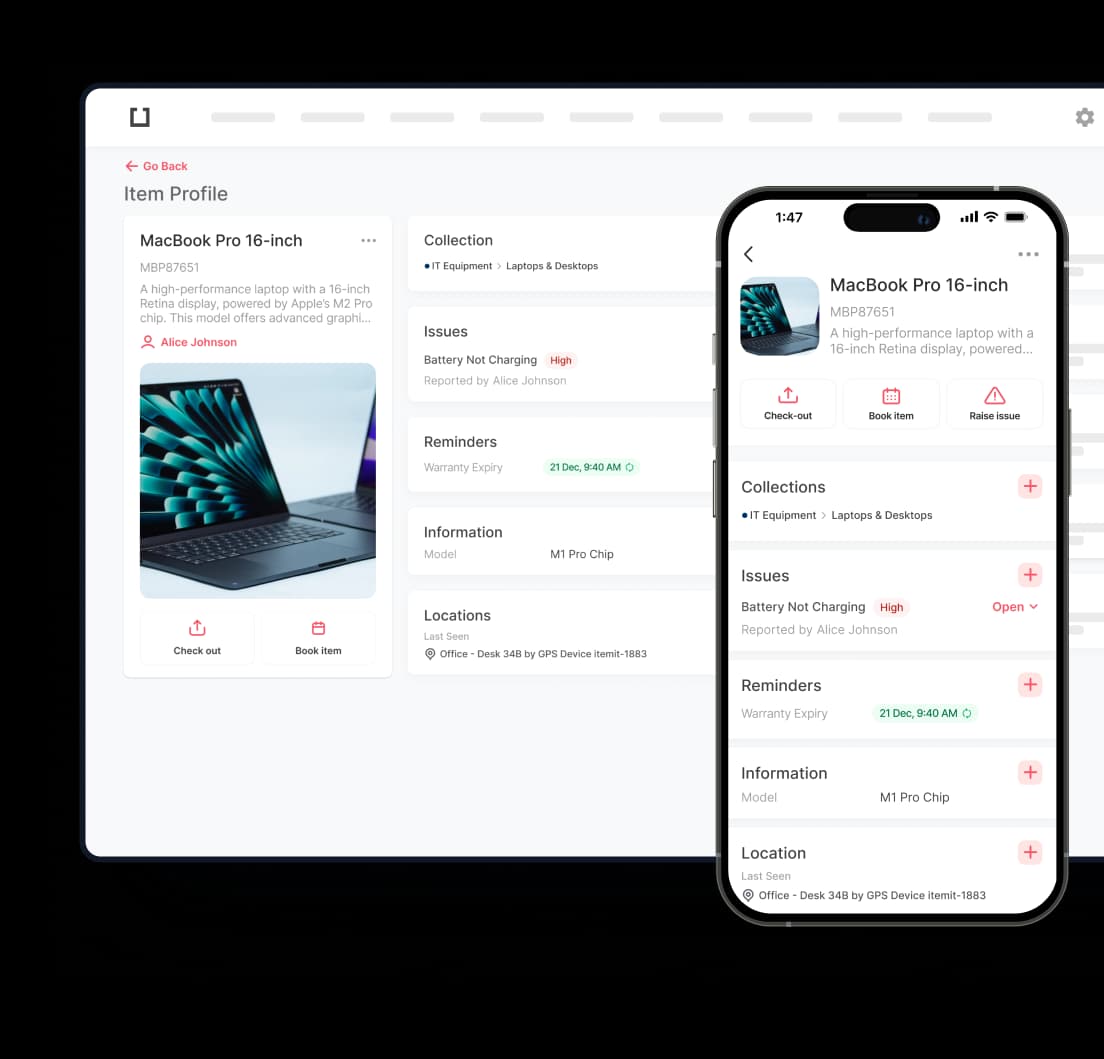
With itemit securely deployed, you can comfortably permanently ditch the deeply outdated corporate Excel spreadsheets and confidently embrace a beautifully unified digital ecosystem. Our incredibly intuitive smartphone mobile application perfectly allows your busy warehouse staff to rapidly scan standard barcodes, advanced QR codes, or clever RFID tags, thereby instantly actively updating live stock counts remotely from any global location. Meanwhile, the impressively robust desktop web portal intuitively provides your upper management teams with a brilliant real time birds eye view of the entire global operation, actively identifying potentially dangerous bottlenecks rapidly in your delicate WIP or critically warning about sudden severe shortages in fundamental MRO completely before they ever become actually disastrous critical issues.

Our intensely powerful software system graciously allows you to easily create multiple custom informative fields and infinitely nested categories, meaning you can flawlessly separate your essential raw materials completely from your high value finished goods with just a single simple button click. Furthermore, our highly impressive lifecycle management capabilities constantly actively help you track heavily depreciating physical assets and efficiently automatically schedule required maintenance checkups, easily completely ensuring your entire active operation consistently remains perfectly legally compliant and simultaneously highly incredibly efficient.

Ready to massively transform exactly how your entire modern business intelligently handles its valuable physical assets? Book a demo with us today and quickly clearly see precisely why the world's most incredibly successful businesses exclusively always choose to actively partner with itemit.

Frequently Asked Questions

Is product packaging correctly considered a raw material or MRO?

Final packaging is almost universally considered a primary raw material because it directly physically accompanies the finished commercial good straight to the end consumer. However, basic shipping supplies strictly used internally to move things around safely might instead be rightly classified officially as MRO.

Exactly how often should a proactive business strictly audit its precise WIP inventory?

The optimal audit frequency truthfully depends entirely on your specific unique production cycle length. Extremely fast moving modern manufacturing lines might desperately require daily or even weekly WIP counting checks, whereas incredibly slow bespoke master craftsmanship might adequately only require straightforward monthly audits.

Why is tracking assorted MRO items historically so incredibly difficult?

MRO items are very often extremely inexpensive and regularly freely accessed by numerous different employees consistently across a multitude of different disconnected departments without proper oversight. Without implementing a very strict mandatory checkout procedure or deploying dedicated tracking software, these little items easily rapidly go totally missing or are improperly hoarded locally.

Choose a better way to track your assets.

Start your trial. 14 days. No risk. No credit card.

itemit Asset Tracking Assets

Don't just track it. itemit.

Start your trial. 14 days. No risk. No credit card.

Assets tracked using itemit