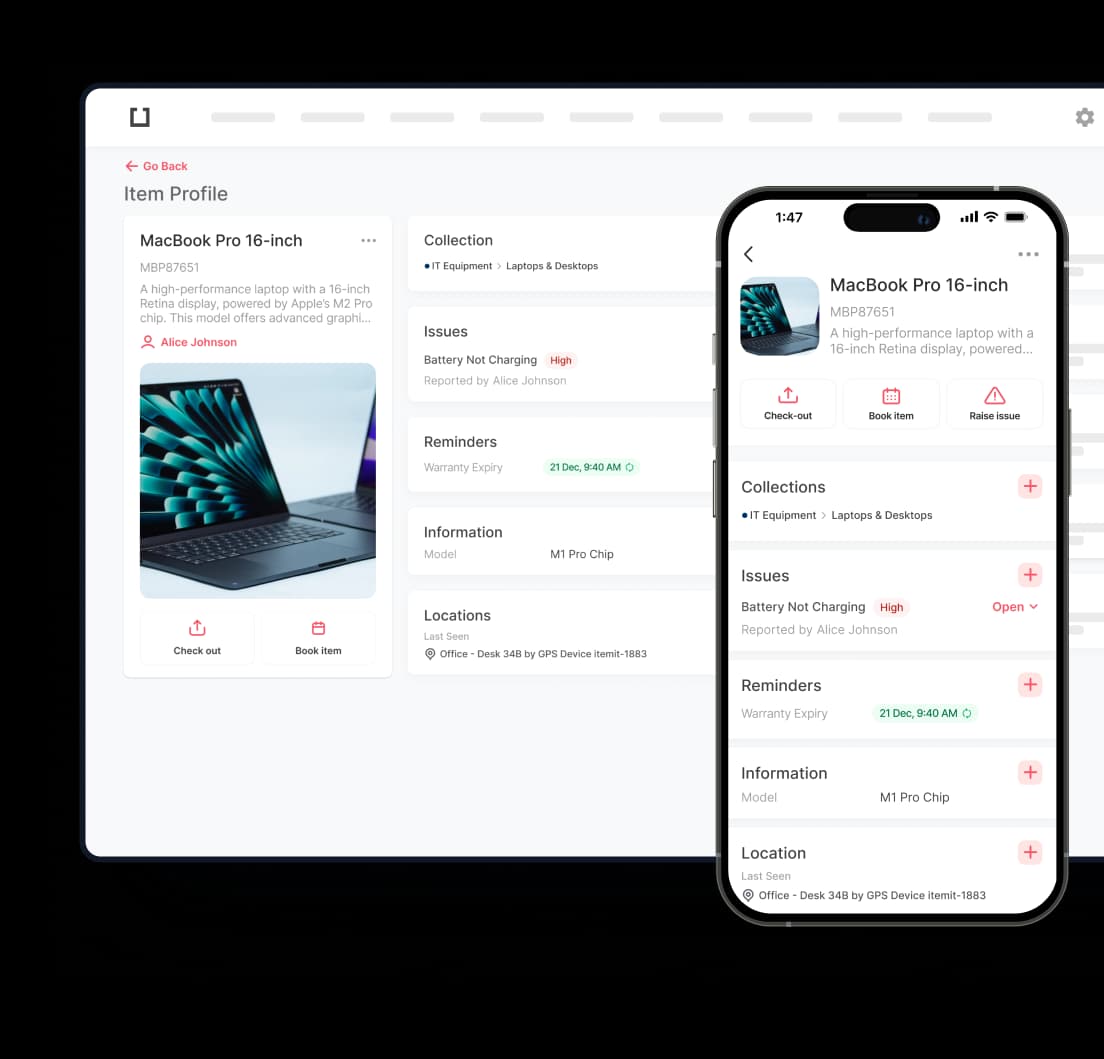
Book a demo and get 10% off your first plan

The Ultimate Guide to Pharmacy Inventory Management

By itemit Team
Published on March 14, 202610 min read
Back to Blog

Poor stock records cost pharmacies real money. Every year, the NHS writes off over £300 million in England alone due to medication waste, and a substantial portion of that traces back to inadequate pharmacy inventory management. Getting stock control right isn't a back-office concern reserved for finance teams. It directly affects patient care, compliance outcomes, and the financial health of every dispensary operating in the UK. This guide covers the realities of drug inventory management, the habits that protect against common failures, and the software that makes accurate tracking genuinely achievable.

Key Takeaways

  • Reliable pharmacy inventory management prevents stock shortages, cuts waste, and keeps dispensaries audit-ready at all times
  • Manual processes and spreadsheets are the root cause of most stock discrepancies pharmacies deal with today
  • Drug inventory management requires FEFO rotation, regular cycle counts, and real-time data visibility, not just end-of-month stocktakes
  • Dedicated tracking software like itemit reduces stock losses, cuts administrative labour, and removes the guesswork from controlled drug reconciliation
  • Pharmacy management teams that adopt structured tracking report faster audits, fewer shortages, and measurable savings on expired stock write-offs
  • Barcode and QR scanning bring the kind of accuracy and speed that paper-based systems can't realistically deliver at scale

Why Pharmacy Inventory Management Is Harder Than It Looks

Ask most pharmacy managers about their stock control, and they'll describe something that works well enough, most of the time. That qualification matters. "Most of the time" is exactly where problems breed.

Pharmacy inventory management sits at the intersection of clinical obligation and commercial necessity. Stock that runs out means patients leave without medication. Stock that expires represents money dispensed, literally, into a waste bag. Controlled drugs add a layer of legal accountability that has no equivalent in almost any other retail or healthcare setting.

Compounding this is the sheer variety of stock a typical dispensary holds. Fast-moving generics sit alongside slow-moving branded specials. Refrigerated biologics need temperature monitoring. Schedule 2 controlled drugs require running balance records that can't have gaps. Managing all of this through a combination of handwritten logs, spreadsheets, and memory is asking for trouble, and most dispensaries that rely on those methods know it.

The result tends to be a cycle. Stock discrepancies appear, triggering manual counts. Manual counts take staff off patient-facing work. Audits approach, prompting a scramble to reconcile records. GPhC inspectors arrive and find documentation that doesn't quite hold up. Then the pharmacy patches the gap and waits for the next cycle to repeat.

Breaking that cycle requires addressing the root problem rather than the symptoms.

Where Things Break Down

Most pharmacy management problems trace back to a handful of recurring failures rather than anything uniquely complicated.

Stock discrepancies rank as the most common. When dispensing records are updated manually, errors accumulate. A busy afternoon shift, a new locum, a labelling confusion between two similar-looking products, each of these introduces small inaccuracies. Over weeks and months, those inaccuracies compound into records that bear little resemblance to what's physically on the shelf.

Expiry waste follows from the same root cause. Without a systematic way to track which products are approaching their expiry dates, rotation relies on staff remembering to check. That works fine until it doesn't. High-cost medications at the back of a refrigerator shelf, a batch of slow-moving branded tablets at the bottom of a bin, these are the items that quietly pass their expiry dates and end up as write-offs.

Controlled drug reconciliation generates a different kind of stress. Pharmacies must maintain accurate running balances for Schedule 2 drugs, with every transaction recorded in a CD register. A single unexplained discrepancy triggers a formal investigation. Manual registers work in principle, but they slow the dispensary down and offer no real-time alerts when something looks wrong.

Multi-site coordination adds a further dimension for pharmacy groups and hospital dispensaries. When stock moves between branches or wards without a proper tracking record, visibility disappears. One branch overstocks; another runs short. Neither knows what the other holds, and transfers happen over the phone based on guesswork.

How to Manage Pharmacy Inventory Efficiently

Inventory of the pharmaceutical industry

Fixing these problems doesn't require a complete operational overhaul. It requires applying a set of disciplines consistently, backed by tools that make accuracy easier than approximation.

1. Start with an honest baseline

Before any system can function reliably, the dispensary needs a true record of what it actually holds. That means a full physical count, reconciled against purchasing records and dispensing logs. Unglamorous, yes. Non-negotiable, also yes.

2. Set reorder points for every product line

Each item should have a defined minimum stock level that triggers replenishment. These thresholds need to account for supplier lead times, seasonal demand patterns, and the real cost of running out versus over-ordering. Review them quarterly, because prescribing patterns shift and an outdated threshold is almost as useless as none at all.

3. Switch to FEFO rotation

Standard first-in, first-out rotation doesn't work for pharmacy stock because two deliveries of the same product may carry different expiry dates. First-expiry, first-out prioritises products by their expiry date rather than their arrival date. Staff need both the training and the shelf space to make this practical. Clear labelling, particularly in refrigerators and CD cabinets, makes the habit stick.

4. Replace annual stocktakes with cycle counts

Counting the entire dispensary once a year is disruptive and leaves too long a gap between audits. Divide stock into sections and count each on a rotating schedule instead. Monthly cycle counts per section keep records accurate without forcing a full operational pause. Most pharmacies that switch to cycle counting report discovering and correcting discrepancies they'd been carrying for months without knowing.

5. Reconcile controlled drugs at every handover

Balance checks should happen when shifts change, not just at the end of the working day. A brief reconciliation at handover catches discrepancies while memories are fresh and investigation is still straightforward. Waiting until closing time means the context for any anomaly has often already been lost.

6. Build accountability into team culture

Reporting a discrepancy promptly should be treated as professional conduct, not as an admission of fault. Dispensaries where staff hesitate to flag errors don't have fewer errors; they just have less documentation of them. That distinction matters considerably when an inspector asks to review CD records.
The Role of Technology in Drug Inventory Management

Paper-based systems and spreadsheets share one fundamental flaw. They reflect what someone chose to write down, not necessarily what actually happened. That gap is where most drug inventory management problems live.

Barcode and QR scanning closes the gap. When a product arrives at the dispensary, scanning its code updates the stock record instantly, without anyone transcribing a number or filling in a form. When it's dispensed, another scan completes the transaction. The time saving per item is seconds, but across a full week of dispensing activity, those seconds add up to hours. More to the point, the accuracy improves dramatically because human transcription errors stop being part of the process.

Real-time visibility changes decisions in ways that retrospective reporting can't. A manager who can see live stock levels across multiple sites, identify products within 30 days of expiry, and spot unusual consumption patterns has an operational advantage that goes well beyond convenience. Shortages get flagged before they become patient-facing problems. Expired stock gets caught before it reaches the write-off pile.

Automated reporting adds the longer-term dimension. Trends in stock movement reveal which products consistently outperform or underperform their forecast, feeding smarter purchasing decisions, better supplier negotiations, and more confident cash flow management. Audits become shorter because the records are already accurate, up to date, and exportable without anyone spending a weekend reconciling spreadsheets.

The demands on hospital dispensaries are even more pronounced, given the volume and complexity of medications involved. Dedicated tracking systems built for healthcare settings handle that scale more reliably than general inventory tools. For a closer look at how tracking works in hospital environments, this guide to hospital asset tracking covers the specific challenges and how structured systems address them.

Manual vs. Software-Based Pharmacy Stock Control

The difference between managing stock manually and using dedicated tracking software shows up in concrete, measurable ways rather than abstract efficiency gains. Here's how the two approaches compare across the most common pressure points.

Area Manual Approach Software-Based Tracking
Stock accuracy Relies on human input; errors accumulate over time Barcode scanning updates records in real time
Expiry tracking Visual spot-checks; depends on staff memory Automated alerts flag products approaching expiry
Controlled drug reconciliation Handwritten register; time-consuming at every handover Digital balance tracking with audit trail
Multi-site visibility Phone calls, shared spreadsheets, guesswork Live stock view across all locations from one dashboard
Audit preparation Manual document gathering; hours or days of work Records already accurate and exportable on demand
Reorder management Based on observation; often reactive Automatic alerts when stock drops below set thresholds
Staff time on stock admin High; routine tasks absorb significant hours each week Reduced considerably; staff redirect to patient-facing work

The gap between these two columns widens as a dispensary grows. A single-site pharmacy managing a modest product range can survive on manual processes, even if it carries unnecessary risk. A multi-site group, a hospital dispensary, or any operation handling controlled drugs at volume can't afford that risk without paying for it regularly.

How itemit Supports Pharmacy Inventory Management

Drug inventory management

itemit is a cloud-based asset tracking software platform that applies precisely these principles to physical stock and equipment management. For pharmacies, the practical benefits show up quickly and in the areas that matter most.

Every stock item or piece of equipment gets tagged with a QR code or barcode. Scanning is fast, consistent, and works regardless of which staff member is operating the device. Records update the moment a scan happens, accessible from any web browser or mobile app. No transcription errors. No records that drift from reality. No end-of-month reconciliation surprises.

Stock losses, one of the persistent drains on pharmacy profitability, drop significantly once dedicated tracking is in place. Tagged items create clear accountability. Misplaced stock gets located rather than written off. Unexplained losses become visible patterns rather than invisible costs accumulating silently across quarters. The itemit asset tracking system supports multiple locations, which solves the coordination problem for pharmacy groups and hospital dispensaries managing stock across wards and branches. Transfers get recorded with a scan, location histories are maintained automatically, and no one needs to make a phone call to find out where something went.

Downtime from equipment failures and stock shortages falls as well. Maintenance reminders and automated alerts surface issues before they escalate. A refrigeration unit due for its service, a batch of cold-chain stock approaching expiry, a dispensing device flagged for inspection, all of these appear in the system with time to act rather than after the damage is done. Labour costs tied to stock administration reduce in parallel. Tasks that previously consumed hours of manual counting and data entry complete in minutes. Audit preparation shrinks from days to an afternoon, because the records are already in order.

For dispensaries thinking through which model of stock control best fits their operation, this overview of types of inventory management sets out the main options clearly and honestly.

Making Stock Control Stick

Pharmacies that manage stock well don't have fewer competing demands on their time. They've built systems where accuracy is the path of least resistance rather than an extra effort on top of everything else. Start with honest data, apply consistent disciplines, and let tracking software carry the administrative load. The improvements in audit readiness, stock accuracy, and staff time aren't marginal. They're the difference between a dispensary that reacts to problems and one that stops them happening. Book a demo with itemit today to improve your pharmacy's asset tracking.

Frequently Asked Questions

What is the biggest challenge in pharmacy inventory management?

The biggest challenge is maintaining 100% accuracy while relying on manual processes and spreadsheets. Human transcription errors compound over time, leading to stock discrepancies, expired medications, and failed controlled drug reconciliations.

How does FEFO rotation work for pharmacies?

FEFO stands for First-Expiry, First-Out. It ensures that the medication expiring soonest is used first, regardless of when it was delivered. This is essential for pharmacies since two deliveries of the same product might have different expiry dates.

Can software prevent controlled drug discrepancies?

Yes, dedicated inventory management software tracks detailed digital records and running balances. Instead of relying on a handwritten register, transactions are automatically logged when a barcode or QR code is scanned, providing an irrefutable audit trail.

Why should pharmacies do cycle counts instead of annual stocktakes?

Cycle counting—verifying different small sections of your stock regularly—causes far less operational disruption than a full annual stocktake. It also uncovers discrepancies early rather than letting them hide in the system for months.

Choose a better way to track your assets.

Start your trial. 14 days. No risk. No credit card.

itemit Asset Tracking Assets

Don't just track it. itemit.

Start your trial. 14 days. No risk. No credit card.

Assets tracked using itemit