Introduction
You may have already seen a few articles online about mathematical patterns in nature. Is it the other way around? Is it a matter of one or the other, or is it more complex than that? Does mathematics imitate life, or does life imitate math? Well, as an answer, can it be both? After all, mathematical patterns are natural patterns. The fact that we can observe math patterns in nature is proof enough that things such as the Fibonacci Sequence actually work and are functional as axioms in mathematics. What happens, then, if we reverse engineer? What if, instead of finding those patterns before we have the eureka moments that they’re in nature, we create technology from the patterns and mechanisms of nature?Patterns in Nature
Patterns have so many uses in the natural world. Whether it’s related to survival or structural integrity, patterns have developed over time to become more and more useful due to evolution.
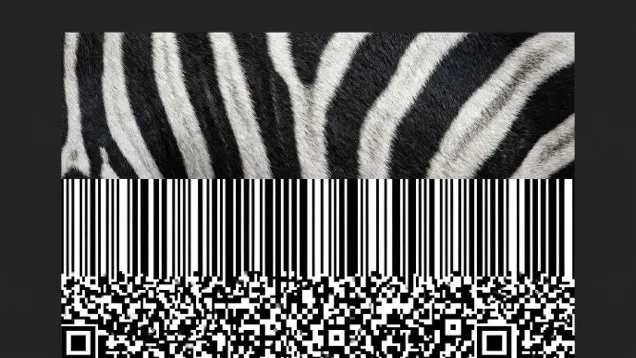
As creatures developed and changed over time, the patterns they create and the patterns that they wear have become fitter and fitter for their purposes. Whether it’s spinning a web to catch the most flies or if it’s having the best stripes to hide from predators or even prey.
In this sense, evolution is similar to an algorithm. The most effective patterns are getting tested and either rejected or accepted over time. The problem is that as prey adapts to hide from predators, predators must also adapt to survive. In this case, nature is just like technology. The best patterns and threads are brought forward in so many different ways, but as technology develops, specific human needs for technology also change.
Fibonacci Sequence
The Fibonacci sequence itself is found a lot in nature. It’s a natural pattern of growth, which is 0, 1, 1, 2, 3, 5, etc. (every new number is the sum of the two previous numbers). While a lot of natural patterns occur, the Fibonacci sequence is seen a lot in nature, whether it’s with the Golden Ratio or if it’s separate from it.
The sequence originates from a thought experiment about immortal rabbits. If two rabbits are in a field, are immortal, and mate once a month, having two offspring per pair, then the growth of the population is the Fibonacci sequence. It starts off with one pair, then there is still one pair the next month, then there are two pairs, then three, then five, then eight, etc.
It is mostly seen in nature with petals. The number of petals on a flower is usually a Fibonacci number. The applications of the Fibonacci sequence can be seen with the Golden Ratio.
Golden Ratio
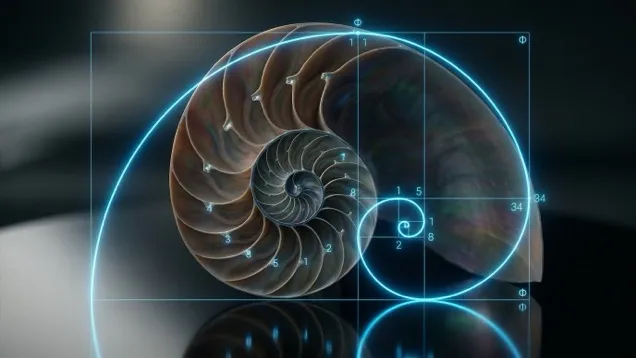
The most common example of patterns in nature you’ll hear about is the Golden Ratio. It stretches from a spiral on the back of a shell to architecture, art, photography, flower petals, pinecones, and even tree branches.
The ratio is achieved with the Fibonacci sequence. Ignoring the first digit (0), each subsequent number divided by the previous one creates a spiral. If the sequence is 0,1,1,2,3,5,8,13, etc. Then the Golden Ratio is illustrated by using 1/1 = 1, 2/1 = 2, 3/2 = 1.5, 5/3 = 1.666…, 8/5 = 1.6, 13/8 = 1.625, etc. As you can see, the number is converging to something between 1.6 and 1.7. This number is the golden ratio, and, much like pi, it has no ending.
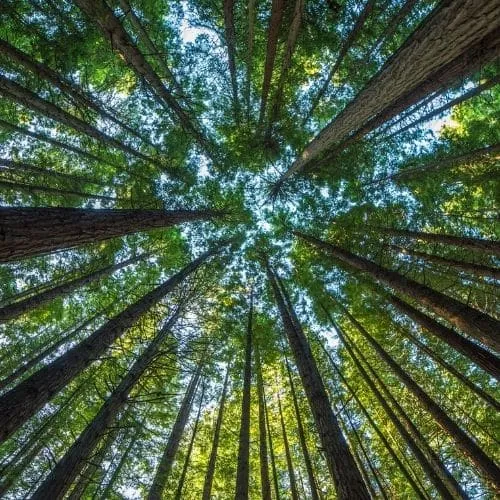
The golden ratio is already used in both the natural and the technological world. It helps with the structural integrity of buildings, pinecones, flowers, and creatures due to how the proportions work and how they converge on this number.
Voronoi Patterns
Fascinating phenomena that elegantly show how mathematical ideas abound in the natural world are Voronoi patterns. These patterns result from the idea of separating a space into sections depending on the distances to a given set of points. Imagine setting some seeds on a level ground. One can divide the area surrounding each seed into a zone in which any point within it is nearest to that seed among all others. Often irregularly formed, these areas are known as Voronoi cells. This geometric arrangement reflects how some natural patterns are created rather than only an abstract mathematical idea.
Voronoi patterns abound in the natural world in a range of circumstances. One amazing illustration of this pattern is the complex honeycomb constructions created by bees. Designed to maximise honey storage using the minimum possible wax, every hexagonal cell in the honeycomb is a Voronoi cell. Dragonfly wings also provide another remarkable illustration since the vein pattern there divides the wing into smaller portions like a Voronoi diagram. Not only are these natural patterns aesthetically beautiful, but they also frequently reflect the most effective method of space partitioning—which is essential for the survival and functioning of different species.
Usually, the demand for efficiency drives Voronoi patterns in nature to arise. These patterns maximize space and resources, whether it comes to the arrangement of seeds in a fruit like pomegranate or the cellular architecture of plant tissues. Voronoi patterns are among the fundamental types of patterns in nature, mostly because of their effectiveness. They show how, a concept that permeates the natural world, natural selection promotes designs that enhance utility while conserving energy expenditure. Knowing these trends not only helps us to understand the mathematical foundations of nature but also shows the great interdependence between geometric ideas and biological processes.